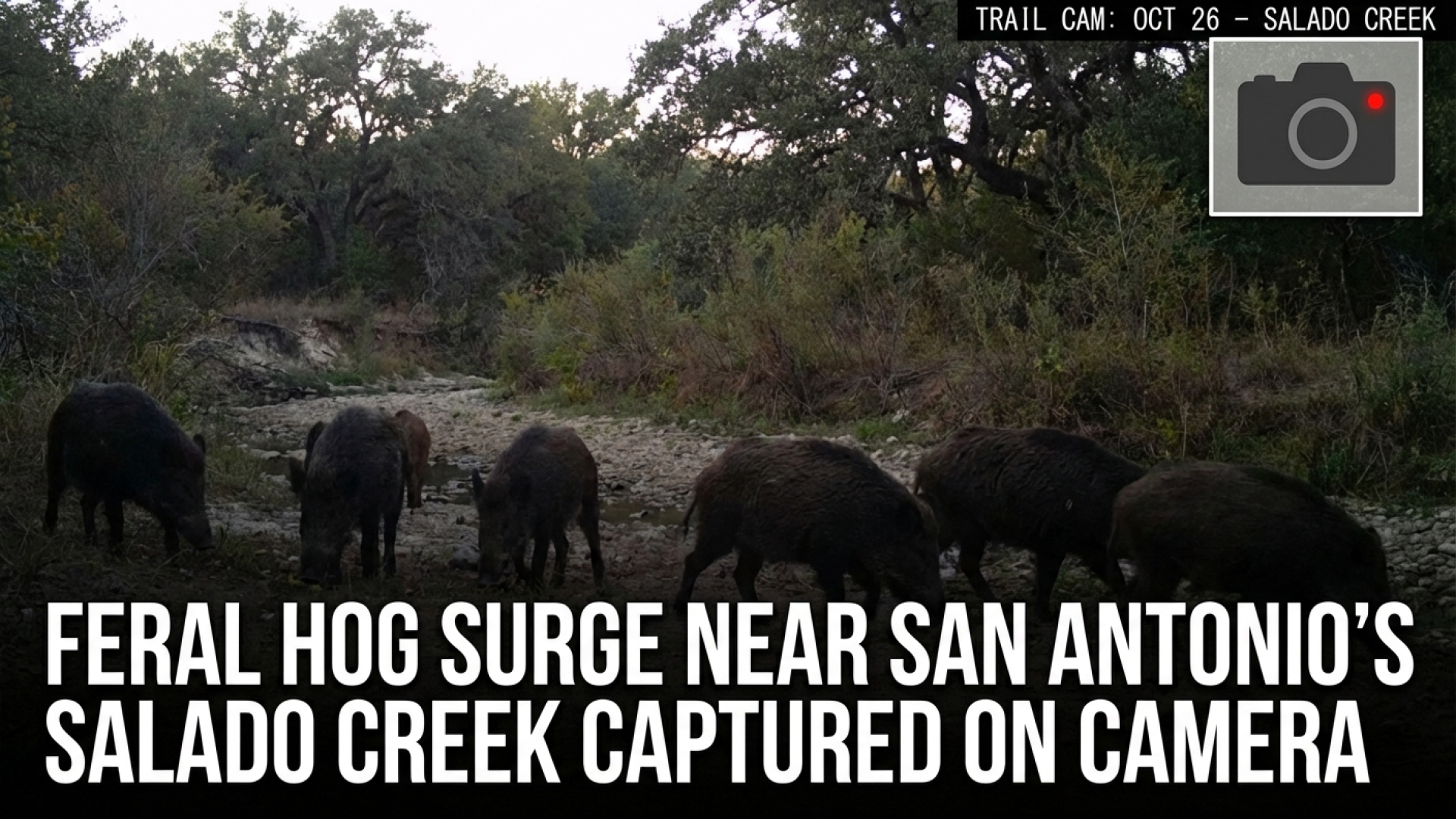
While the struggle against invasive species is a familiar narrative in Western New York, a recent surge in wild hog activity in the Southwest serves as a stark cautionary tale for the Great Lakes region. Reports from San Antonio, Texas, where a family of feral hogs was recently captured on a critter camera near Salado Creek, highlight the rapid expansion of a species that poses a significant threat to both urban infrastructure and agricultural stability.
At the Lake Erie Times, we are closely monitoring how these national environmental trends reflect local ecological challenges. William Strasmore explores the implications of this burgeoning population and what New York residents should know about the risks of invasive swine encroachment.
The Escalating Crisis in Texas
Texas currently manages the largest wild pig population in the United States, with estimates climbing toward four million animals. This uncontrolled growth is more than a nuisance; it is an economic drain. Biologists from Texas Parks and Wildlife suggest that damage to crops and rangeland totals approximately $118 million annually. The recent sightings near the Frost Bank Center demonstrate that these animals are no longer confined to rural outposts; they are aggressively moving into suburban and urban corridors as development shifts natural boundaries.
Environmental and Economic Impact Comparison
To understand the scale of the threat, it is helpful to look at the data regarding feral swine impacts. While New York has maintained a “proactive eradication” stance, the potential for damage remains high if populations are allowed to establish.
| Category | Impact Description | Primary Concerns |
|---|---|---|
| Agricultural | Destruction of crops (corn, soybeans) and soil erosion. | Economic loss for WNY farmers. |
| Ecological | Predation of ground-nesting birds and competition with local deer. | Loss of biodiversity in Erie County. |
| Public Health | Carriers of over 30 diseases, including swine brucellosis. | Contamination of local water sources. |
A Local Perspective: Western New York’s Defensive Stance
Unlike the southern United States, where the feral hog population has reached a point of management rather than eradication, the New York State Department of Environmental Conservation (DEC) has historically taken a zero-tolerance approach. The goal in the Empire State is to prevent these animals from establishing a self-sustaining population. However, the Texas experience shows that once these “wild neighbors” move into residential zones, the complexity of removal increases exponentially.
In regions like the Western New York community, the discharge of firearms is often prohibited in densely populated areas, complicating control efforts. While trapping is a viable alternative, the intelligence and adaptability of these animals make them difficult to mitigate once they become accustomed to human activity.
Managing the Invasive Threat
The Lake Erie Times encourages property owners to remain vigilant. Addressing invasive species requires a multi-faceted approach involving state cooperation and private responsibility. In Texas, residents are navigating complex laws where hunting is permitted on private land but restricted by city ordinances. In New York, the focus remains on reporting sightings immediately to the DEC to ensure professional intervention before a local population can take root.
Experts advise extreme caution when encountering these animals. Beyond their physical strength, they are known carriers of swine brucellosis, a bacterial illness that can be transmitted to humans and domestic pets. For those in our region looking for more information on local conservation efforts, our local news section provides ongoing updates on environmental policy and wildlife management.
Resources for Residents
For detailed strategies on managing invasive species or to report a sighting in Western New York, the following resources are essential:
- NYS Department of Environmental Conservation: Guidelines on feral swine reporting and regional wildlife safety.
- Texas A&M AgriLife Extension: Comprehensive research on feral hog management and biological data.
- Lake Erie Times Investigative Reports: Deep dives into how regional dynamics affect our local ecosystem.
As development continues across the region, the intersection of wildlife and urban life will only become more frequent. Staying informed and proactive is the best defense against the environmental and economic burdens posed by invasive species.
Disclaimer: The content provided by Lake Erie Times is for informational purposes only and should not be considered as professional legal or financial advice. Some links on Lake Erie Times are affiliate links. This means that if you make a purchase through these links, we may earn a commission at no additional cost to you.