The Artemis II astronauts received a hero’s welcome upon their return to Houston, Texas, marking a triumphant conclusion to a mission that has captivated the nation and reinvigorated the spirit of exploration from the Gulf Coast to the shores of Lake Erie. After a journey that pushed the boundaries of human reach, the crew is back on solid ground, bringing with them a new era of lunar science.
A Hero’s Welcome in Houston
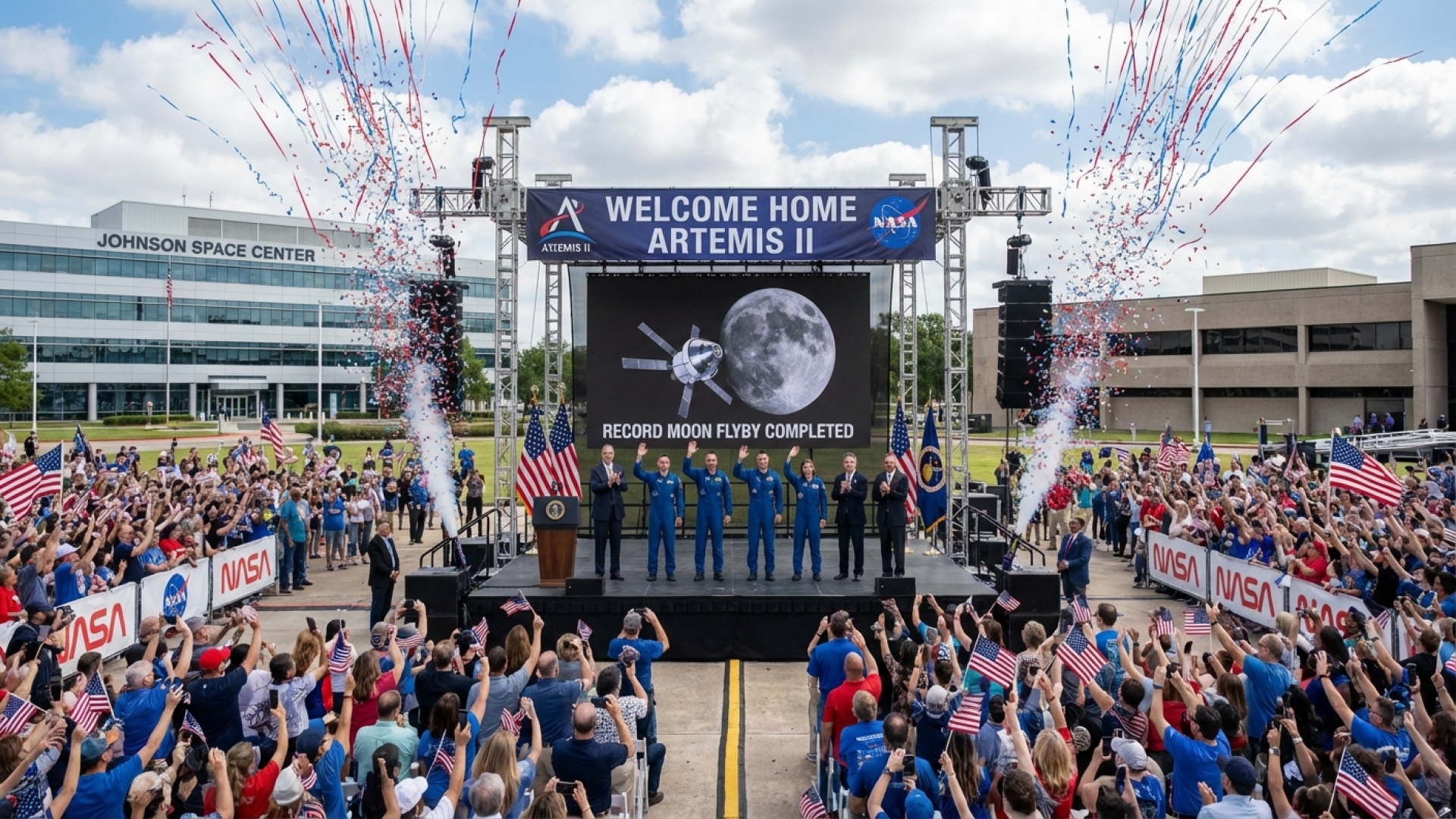
Still marveling over their record-breaking moon mission, the Artemis II astronauts received a thunderous welcome home Saturday from hundreds of supporters at Ellington Field. This homecoming celebrated NASA’s lunar comeback, a mission that officially set a new record for deep space travel. The crew of four arrived near NASA’s Johnson Space Center and Mission Control, flying in from San Diego following a successful splashdown in the Pacific just one day prior.
After a brief, emotional reunion with their families, the astronauts took the stage in a hangar packed with space center personnel, engineers, and high-ranking officials. The event was attended by NASA leadership, flight directors, and the Orion capsule management team, alongside the agency’s active and retired astronaut corps. “Welcome home, Artemis II,” echoed through the hangar as the team was lauded for their bravery and technical precision.
The crew shared their reflections with a mix of humor and humility. “It’s a special thing to be a human; it’s a special thing to be on planet Earth,” Commander Reid Wiseman remarked, visibly moved by the reception. Mission specialist Jeremy Hansen joked about the physical transition back to gravity, noting the surreal experience of being home after such a vast journey.
Echoes of Apollo: A Poignant Return
The timing of the homecoming added a layer of historical weight to the event. Wiseman and his U.S.-Canadian crew returned to their Houston base on the 56th anniversary of the launch of Apollo 13. While that 1970 mission is remembered for its “Houston, we’ve had a problem” crisis, the Artemis II mission stands as a testament to how far safety and exploration technology have advanced in the decades since.
Mission Highlights and Record-Breaking Stats
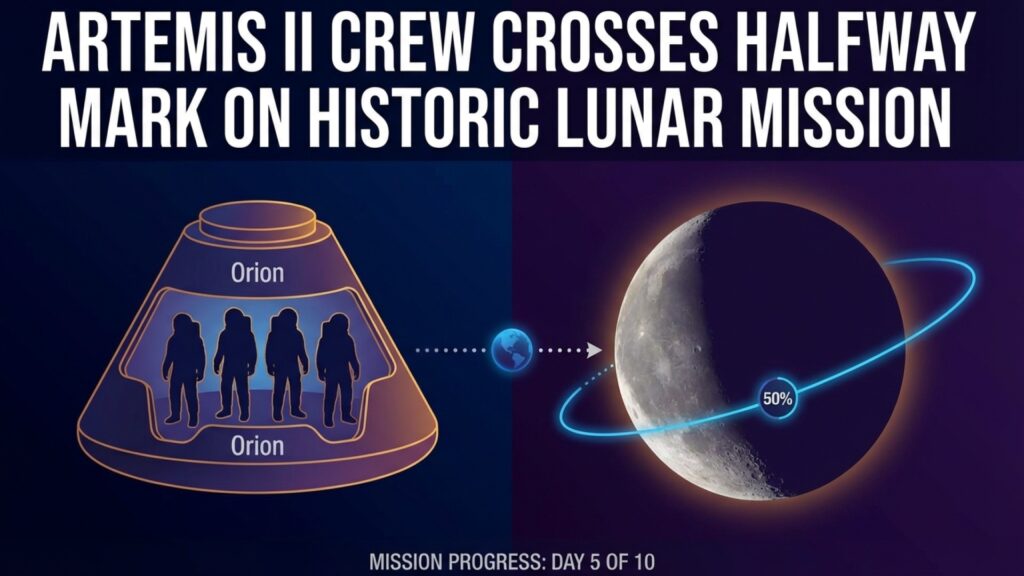
During the nearly 10-day mission, the crew voyaged deeper into space than any moon explorers in history. They captured unprecedented views of the lunar far side and experienced a total solar eclipse from a cosmic perspective. At its furthest point, the spacecraft reached 252,756 miles (406,771 kilometers) from Earth, surpassing the distance record previously held by Apollo 13.
One of the most striking visual achievements was a new “Earthset” photo, depicting the “Blue Marble” dipping behind the rugged, gray horizon of the moon. This image serves as a modern successor to the iconic “Earthrise” photo taken by Apollo 8 in 1968, reminding a new generation of our planet’s fragile beauty.
Below is a summary of the mission’s key milestones:
| Mission Metric | Details |
|---|---|
| Max Distance from Earth | 252,756 miles (406,771 km) |
| Mission Duration | Approximately 10 Days |
| Crew Members | Wiseman, Glover, Koch, Hansen |
| Historical Milestone | First crewed lunar mission since 1972 |
Overcoming Technical Challenges
Despite the mission’s grand successes, it was not without practical hurdles. The crew had to manage a malfunctioning space toilet, a reminder that even the most advanced voyages must contend with mundane engineering challenges. NASA officials confirmed that a design fix is already in development to ensure total functionality for the upcoming longer-duration moon-landing missions.
The Crew and the Path to Artemis IV
The crew—comprising Commander Reid Wiseman, pilot Victor Glover, Christina Koch, and Canada’s Jeremy Hansen—are the first humans to visit the lunar vicinity since Apollo 17 concluded the first era of exploration in 1972. Their success is a vital stepping stone for the Western New York aerospace contractors and national scientific partners who contribute to the broader Artemis program.
NASA is now pivotally focused on next year’s Artemis III, where a new crew will practice docking procedures in Earth’s orbit. These milestones are the prerequisite for Artemis IV, currently scheduled for 2028, which aims to land two astronauts near the lunar south pole. As we look toward the stars, the success of Artemis II confirms that the journey back to the moon is no longer a distant dream, but a current reality.
About the Author: William Strasmore is a veteran news reporter for the Lake Erie Times, specializing in investigative journalism and regional analysis. With a focus on community impact and national progress, William provides Western New York with in-depth coverage of the issues that matter most.
Disclaimer: The content provided by Lake Erie Times is for informational purposes only and should not be considered professional legal or financial advice. Some links on our site may be affiliate links; we may earn a commission at no additional cost to you, supporting our commitment to quality local journalism.