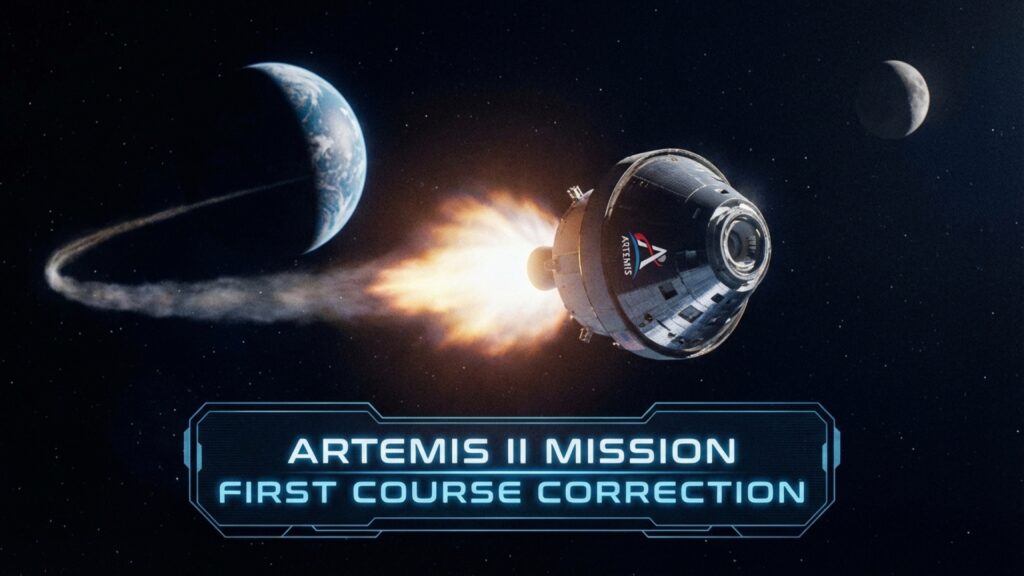
As NASA prepares for the historic Artemis II mission, which will carry a crew of astronauts on a lunar flyby, the spotlight has turned to the critical safety components of the Orion space capsule. Ensuring the crew’s safe return to Earth hinges on the integrity of its thermal protection system—a system that has undergone rigorous evaluation right here in Western New York.
The Lake Erie Times has been following the developments at CUBRC, the Cheektowaga-based research powerhouse that played a pivotal role in validating the capsule’s design. Our investigation into the local impact of national aerospace projects reveals how our region remains a cornerstone of American innovation and safety.
The Hypersonic Challenge of Re-entry
Returning from the moon is a feat of physics that pushes materials to their absolute breaking point. As the Orion capsule hits Earth’s atmosphere, it travels at a staggering 25,000 mph. These hypersonic speeds create a violent interaction with atmospheric gases, generating a plasma field and shock waves that drive temperatures to 5,000 degrees Fahrenheit.
To put that into perspective, the exterior of the Orion heat shield must withstand temperatures hotter than the surface of the sun. Any failure in this ablative material could lead to a catastrophic breach, making the testing conducted in our backyard essential for the lives of the Artemis crew.
Data-Driven Lessons from Artemis I
The necessity for local testing became even more apparent following the uncrewed Artemis I flight in 2022. While the mission was overall a success, post-flight inspections revealed that the heat shield sustained more “charring” and material loss than NASA engineers had predicted. On-board footage showed chunks of the protective coating eroding in a manner that required immediate technical review.
NASA’s response was to look toward the specialized facilities in Cheektowaga to simulate these extreme conditions and refine the protective systems.
Cheektowaga’s CUBRC: Where Space Safety is Proven
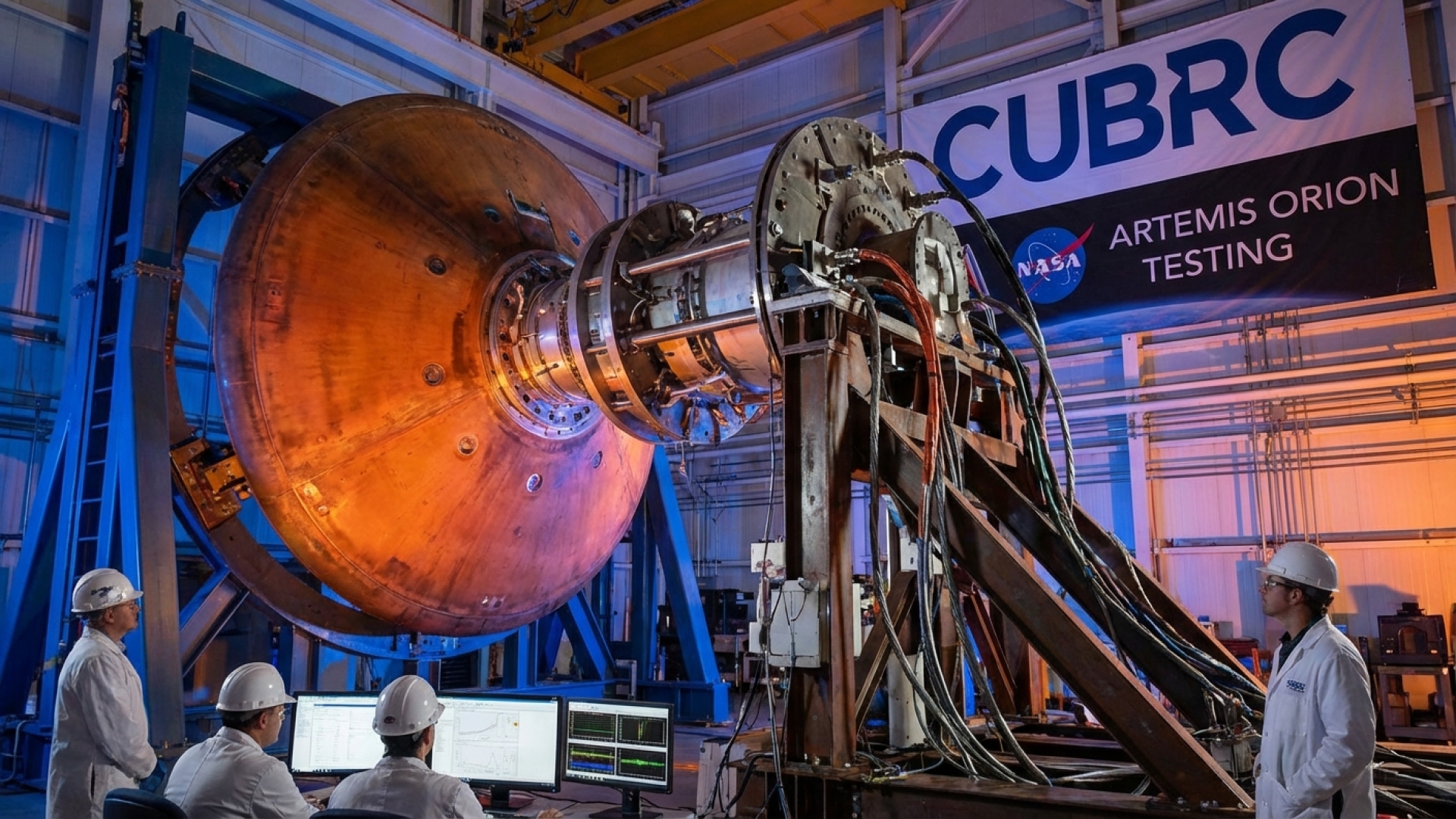
Located on Genesee Street, CUBRC operates advanced shock wind tunnels capable of mimicking the exact conditions of atmospheric re-entry. In 2023 and 2024, CUBRC engineers utilized high-fidelity scale models of the Orion capsule to measure heating rates and aerodynamic flow.
These tests provided the empirical data necessary to adjust the heat shield’s design. This collaboration highlights the intersection of local news and global exploration, as Western New York’s business and research sectors provide the backbone for NASA’s “Moon to Mars” vision.
| Mission Parameter | Details |
|---|---|
| Mission Goal | Crewed Lunar Flyby (Artemis II) |
| Re-entry Speed | 25,000 mph (Mach 32+) |
| Peak Temperature | 5,000° Fahrenheit |
| Testing Location | CUBRC, Cheektowaga, NY |
Confidence Through Rigorous Analysis
Despite the challenges observed in previous flights, NASA leadership maintains a high level of confidence in the revised designs. NASA Associate Administrator Amit Kshatriya recently addressed concerns, noting that while no mission is without risk, the analytical work performed has mitigated “rational fears” regarding the heat shield’s performance.
Tim Wadhams, CUBRC’s Vice President of Aerosciences, confirmed that the testing in Cheektowaga was directly responsible for several design iterations. “That design changed several times based on the heating rates that we were measuring,” Wadhams explained. “The data we provided allowed NASA to account for hypersonic flow physics that are unique to this mission profile.”
A Local Connection with Global Stakes
The testing at CUBRC isn’t just a professional milestone for the Cheektowaga team; it is deeply personal. Tim Wadhams shares a long-standing friendship with Artemis II Mission Commander Reid Wiseman. The two were classmates at Rensselaer Polytechnic Institute, both earning degrees in aerospace engineering.
This personal bond reinforces the commitment to excellence found within the WNY scientific community. When Artemis II eventually launches, the work performed on Genesee Street will be what stands between the crew and the vacuum of space, ensuring that Commander Wiseman and his team return home safely.
Editor’s Note: Lake Erie Times is your comprehensive source for the latest news and insights from Buffalo and the broader Western New York region. For more updates on local contributions to national projects, visit our Community section.
Disclaimer: The content provided by Lake Erie Times is for informational purposes only and should not be considered as professional legal or financial advice. Some links on Lake Erie Times are affiliate links. Our recommendations are based on careful research and our commitment to quality journalism.