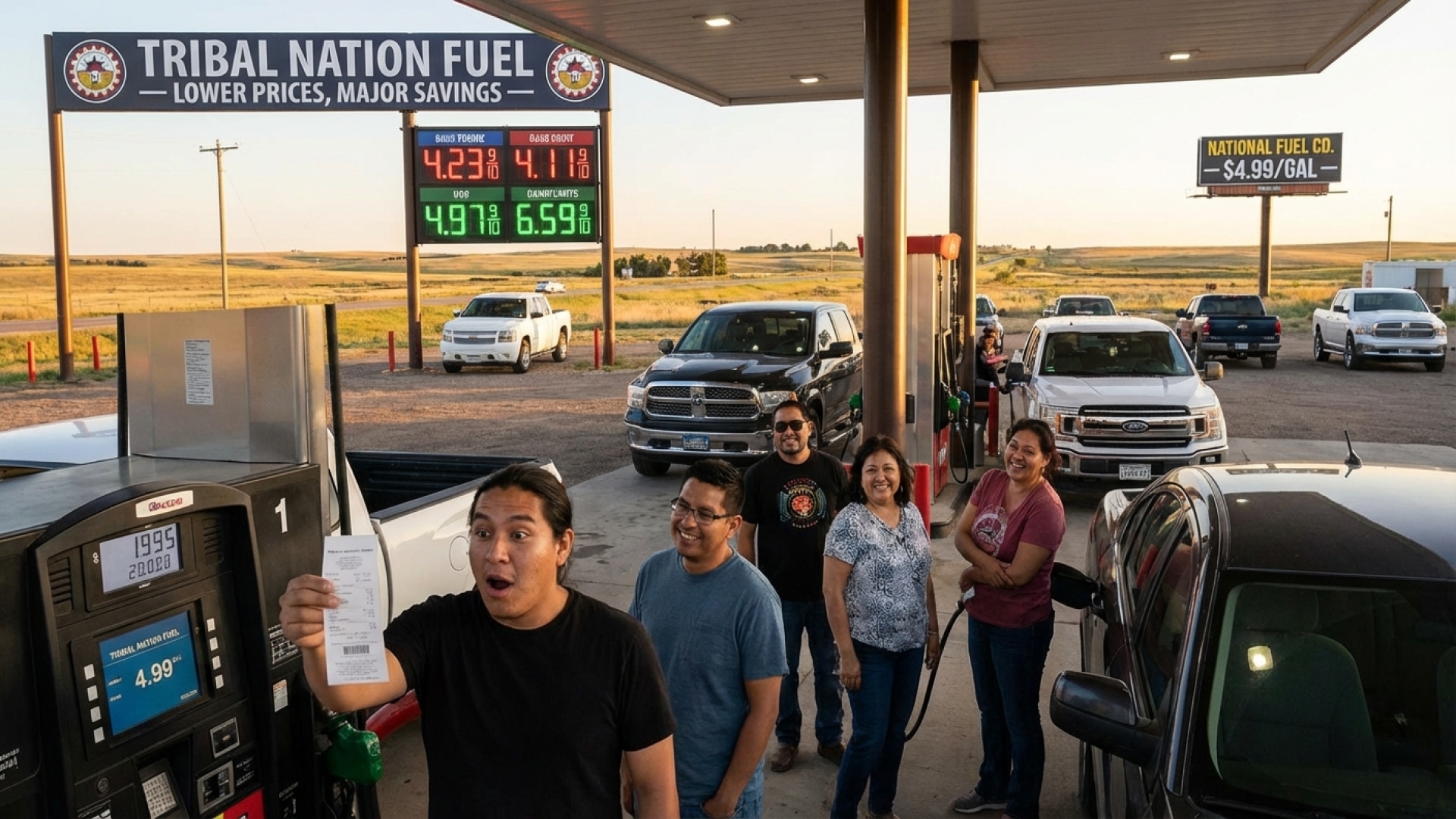
Western New York drivers are feeling the sting at the pump as geopolitical instability continues to drive fuel costs upward. However, across the Buffalo region and the nation, motorists are discovering a significant financial reprieve by frequenting tribally owned gas stations. For residents in our corner of the state, these sovereign-run retailers have become essential stops in the battle against inflation.
Market Pressures Drive the Search for Savings
As regional gasoline prices climb, the digital search for affordable fuel has reached a fever pitch. Digital tools like Gas Buddy have become staples for local commuters looking to shave dollars off their weekly commute. According to AAA, national averages have surged past $4.15 per gallon—an increase of more than $1 since the onset of the Iran conflict in late February. While economists warn that persistent tensions may trigger further inflationary spikes, the relief found on Indigenous lands remains a rare bright spot for consumers.
Currently, nearly 500 tribally owned convenience stores operate across the United States, offering prices that frequently undercut corporate competitors. In Western New York specifically, the Cattaraugus Indian Territory has become a hub for savings, with prices recently hovering around $3.65 per gallon—roughly 50 cents lower than prices found in neighboring Erie County towns.
| Location / Reservation | Reported Price (Per Gal) | Estimated Savings |
|---|---|---|
| Cattaraugus Territory, NY | $3.65 | ~$0.50 |
| Tulalip Reservation, WA | $4.84 | ~$0.75 |
| Chukchansi Crossing, CA | $5.09 | ~$0.60 |
| Mescalero Apache, NM | $3.79 | Varied |
The Legal Framework of Tribal Fuel Sales
The competitive pricing advantage enjoyed by these stations is largely rooted in federal Indian law and tax exemptions. While tribes generally contribute to the federal fuel tax—currently 18.4 cents for gasoline and 24.3 cents for diesel—state-level taxes present a different legal landscape. For over a century, U.S. courts have upheld that states lack the jurisdiction to collect taxes from Native Americans on their own sovereign land.
With federally recognized tribes located in 35 states, the impact of these exemptions varies by geography. In California, where state taxes reach 71 cents per gallon, the savings are dramatic. In New York, the complexities of distribution and state-tribal agreements continue to evolve. Notably, a 2019 Supreme Court decision involving the Yakama Nation in Washington state reinforced the principle that specific treaties can prohibit state fuel taxes on tribal lands to ensure the free movement of tribal commerce.
Beyond the Pump: A Community Business Model
While low gas prices act as the primary draw, the economic engine of these stations is the convenience store itself. High-volume traffic at the pumps leads to increased sales of snacks, groceries, and services, which carry much higher profit margins than fuel. For many rural areas, these establishments serve as vital lifelines in “food deserts” where traditional grocery stores are absent.
As of 2025, tribal nations operate nearly 500 such stores, with significant footprints in New York, Oklahoma, and Washington. Some, like the Oneida Indian Nation in Central New York, have developed sophisticated, multi-site retail chains. These businesses often integrate additional amenities, such as:
- Drive-through smoke shops
- Professional car washes
- Full-service truck stops
- “Gasinos” (Gas stations featuring limited gambling machines)
For the tribes, these revenues are not just corporate profits; they are essential funds for community infrastructure. At the Tulalip Reservation and similar territories, fuel and retail revenue is reinvested into local roads, police departments, healthcare facilities, and education programs.
A Shift in Consumer Loyalty
The appeal of these stations is shifting from pure necessity to a matter of community partnership. In Paden, Oklahoma, diesel users have reported saving nearly 50 cents per gallon by visiting the Citizen Potawatomi Nation stations. Beyond the math, many Western New York residents express a preference for supporting tribal businesses that play an active role in regional development.
New customers, including those recently forced back into internal combustion vehicles from EVs due to total losses or lifestyle changes, are now regular fixtures at these stations. Whether through the lens of economic survival or community support, the role of tribal fuel stations in the Western New York economy has never been more prominent.
For more updates on local economic shifts, visit the Lake Erie Times Business section.
About the Author: William Strasmore is a dedicated news reporter for the Lake Erie Times, providing in-depth, impartial coverage of issues affecting Western New York. With a focus on investigative journalism, William uncovers the regional dynamics that shape our community. View more of his work on his author page.
Disclaimer: The content provided by Lake Erie Times is for informational purposes only and should not be considered as professional legal or financial advice. Affiliate Disclaimer: Some links on Lake Erie Times are affiliate links. If you make a purchase through these links, we may earn a commission at no additional cost to you.