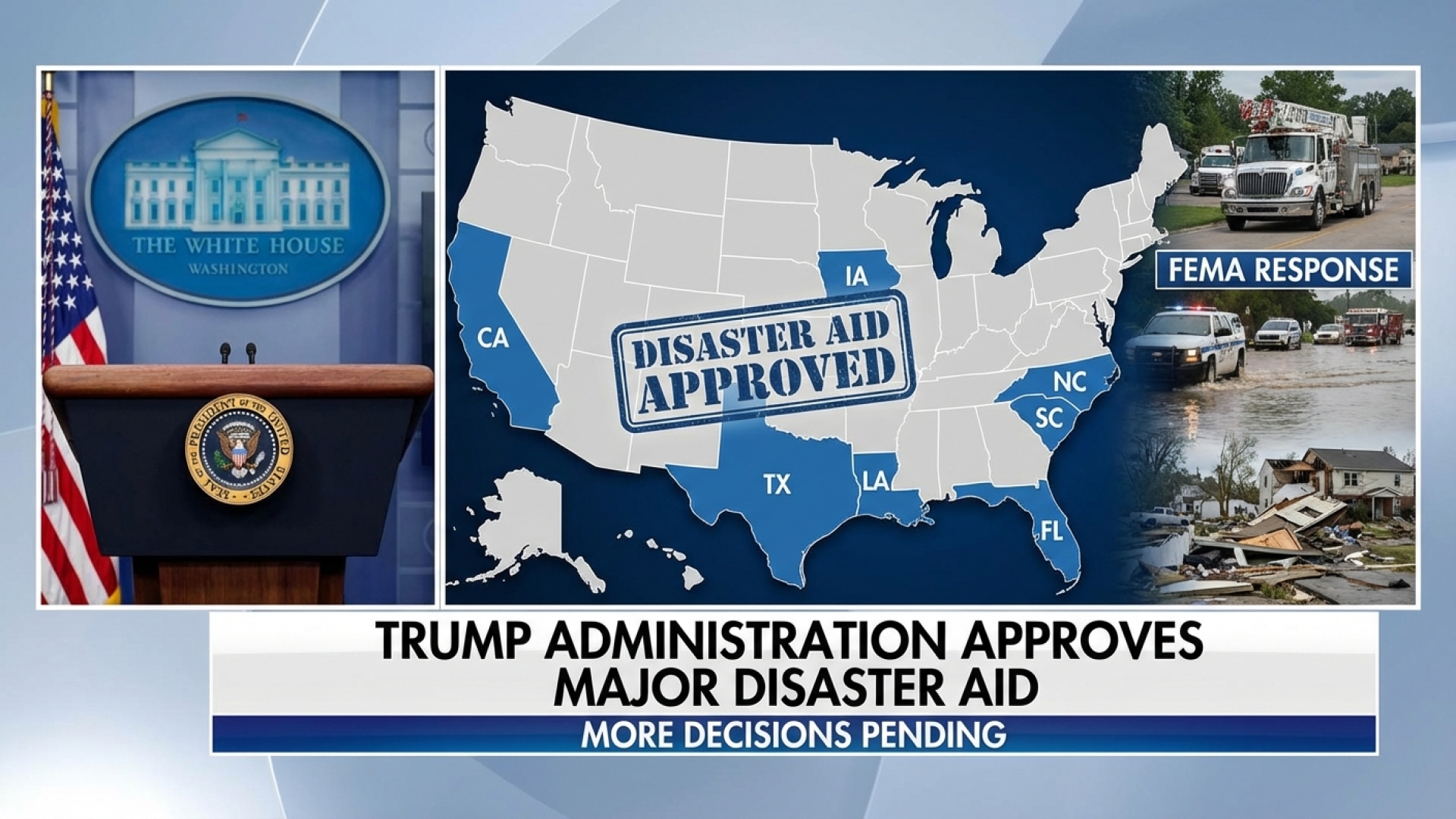
President Donald Trump has authorized major disaster declarations for seven states, a move confirmed by the Federal Emergency Management Agency (FEMA). This executive action enables affected communities to access essential federal resources for recovery following a series of extreme weather events across the country.
States Approved for Federal Disaster Assistance
According to FEMA records, the administration has granted major disaster declarations to a diverse group of states. These designations are critical for unlocking federal funding intended for public infrastructure restoration and direct survivor aid.
| State | Incident Type / Update |
|---|---|
| Alaska, Idaho, Montana, Oregon | Major Disaster Declaration Approved |
| South Carolina, South Dakota, Washington | Major Disaster Declaration Approved |
| Hawaii | Approval for March Flooding Events |
| Tennessee & Mississippi | Amended declarations for Winter Storm relief |
In addition to the new approvals, past declarations for Tennessee and Mississippi were amended to include additional counties eligible for individual assistance following a severe winter storm cycle. While these specific declarations focus on the Western and Southern regions, the precedent for federal relief remains a high-priority topic here in Western New York, where regional resilience against lake-effect events is a constant focus for the Lake Erie Times.
FEMA Leadership and Budgetary Constraints
The announcement follows the recent appointment of Homeland Security Secretary Markwayne Mullin, who now oversees FEMA’s operations. Mullin has signaled an intent to accelerate recovery efforts for past disasters as the Atlantic hurricane season approaches on June 1. However, these efforts face significant headwinds due to an ongoing eight-week Department of Homeland Security (DHS) shutdown.
While disaster response can proceed because the Disaster Relief Fund (DRF) is a non-lapsing account, reports indicate the fund is nearing exhaustion. To replenish the DRF, Congress must pass a DHS appropriations bill, which includes over $26 billion in requested funding. Without this legislation, the agency’s long-term capacity to support large-scale recovery remains in question.
Increased Wait Times and State Responsibility
For many local municipalities, the wait for federal answers has reached historic lengths. Recent analysis shows that disaster request approvals now average over a month, a sharp contrast to the two-week turnaround typical during the 1990s and early 2000s.
White House spokesperson Abigail Jackson defended the administration’s pace, stating that federal tax dollars are intended to supplement, rather than replace, state-level obligations. The administration’s policy appears geared toward incentivizing local governments to invest in proactive resilience before a crisis occurs. However, this shift in philosophy has led to friction with several state leaders.
Controversy Over Denied Requests and Mitigation
Several states have challenged the administration’s denial of aid. Maryland, for instance, saw its request for May 2025 flooding assistance rejected twice, despite FEMA assessments confirming damage exceeding $33 million.
Critically, the most recent approvals lack hazard mitigation funding. This specific type of aid is designed to help communities “build back better” by reinforcing infrastructure against future threats. President Trump has not authorized a hazard mitigation request in over a year, representing a notable departure from previous administrative standards where such funding was a routine component of disaster support packages.
William Strasmore is a veteran news reporter for the Lake Erie Times, providing investigative coverage on local politics and community affairs. With a commitment to transparency and regional integrity, Strasmore covers the stories that impact the Western New York landscape. For more in-depth analysis, visit his author page.
About Lake Erie Times: Lake Erie Times is your comprehensive source for the latest news, insights, and stories from Buffalo, New York, and the broader Western New York region. Our mission is to provide accurate, engaging news coverage that fosters informed dialogue within our community.
Disclaimer: The content provided by Lake Erie Times is for informational purposes only and should not be considered professional legal or financial advice. Some links on Lake Erie Times are affiliate links; we may earn a commission on purchases made through these links at no additional cost to you.