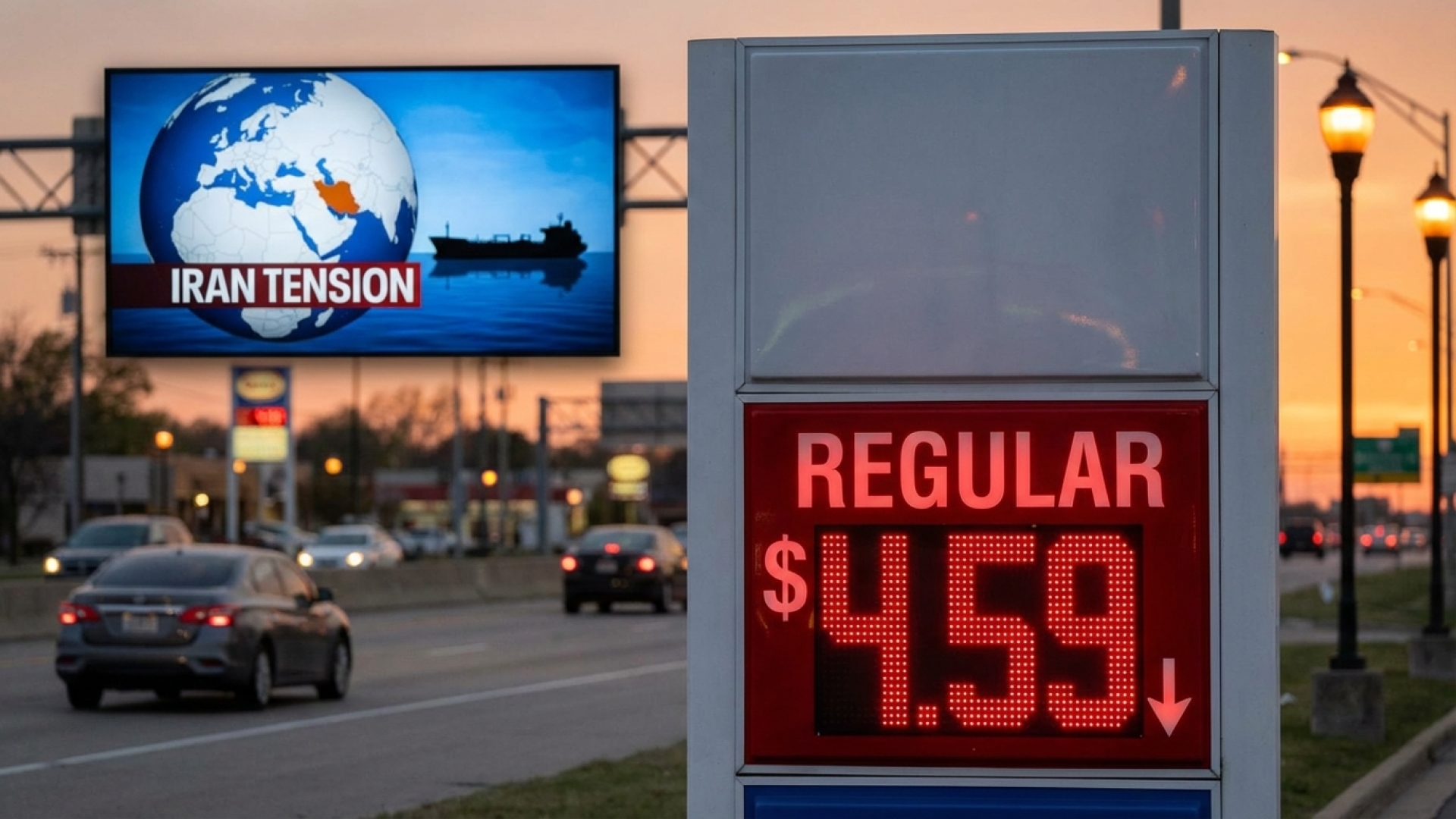
While the national average for a gallon of regular gasoline saw a marginal decrease of 1 cent on Wednesday, drivers across Western New York continue to navigate a volatile energy landscape. The national average stood at $4.108, down slightly from Tuesday’s $4.118, as global markets react to the ongoing military blockade in the Strait of Hormuz and tentative ceasefire negotiations involving Iran.
For Lake Erie Times readers, these fluctuations remain a primary concern for household budgets. At current levels, fuel costs are nearly a dollar higher than they were this time last year—specifically 94 cents per gallon higher—representing a significant year-over-year increase in the cost of commuting and commerce in the Buffalo region.
Geopolitical Tensions and the Strait of Hormuz
The pricing volatility stems largely from instability in the Middle East. Roughly 20% of the world’s crude oil passes through the Strait of Hormuz. Despite recent ceasefire discussions, a U.S. military blockade launched on Monday has complicated trade routes, keeping global supply chains on edge. These international disruptions have a direct “trickle-down” effect on local pumps in New York, as crude oil prices have repeatedly surged past the $100-per-barrel mark.
Regional Price Comparison
While every state in the nation currently reports an average price above $3.442, regional disparities remain stark. The West Coast continues to see the highest costs, while the South and Great Plains benefit from proximity to major refineries and lower state taxes.
| Region/State | Avg. Price per Gallon | Trend |
|---|---|---|
| California | $5.878 | Highest in Nation |
| Hawaii | $5.651 | Elevated |
| Washington | $5.391 | Elevated |
| Oklahoma | $3.444 | Lowest in Nation |
| Kansas | $3.507 | Low |
Diesel and Supply Chain Pressures
The cost of diesel fuel also saw a minor reduction on Wednesday, dropping to $5.635 per gallon. Despite this reprieve, prices remain dangerously close to the record high of $5.816 set in June 2022. For the Western New York business community, sustained high diesel costs translate directly into higher freight and shipping fees, ultimately impacting the retail price of groceries and consumer goods.
Why Prices Vary Between Stations
Drivers may notice significant price gaps even between neighboring stations. Several factors influence these discrepancies:
- State Taxes: California’s taxes reached 71 cents per gallon last year, compared to just 9 cents in Alaska.
- Logistics: Distance from major refineries increases transportation costs for fuel.
- Retail Strategy: Large retailers often price gas competitively to drive foot traffic into convenience stores, where profit margins are higher.
- Local Competition: The presence of nearby rivals often forces prices down as stations vie for volume.
The Long-Term Outlook
The current energy crisis traces back to the escalation of conflict in the Middle East following military actions on February 28. These events have created a ripple effect through oil production and distribution channels. As William Strasmore continues to monitor local news and economic shifts, the primary concern for the Western New York region remains how long these elevated costs will persist before meaningful relief reaches the consumer.
Disclaimer: The content provided by Lake Erie Times is for informational purposes only and should not be considered as professional legal or financial advice. Some links on Lake Erie Times are affiliate links. This means that if you make a purchase through these links, we may earn a commission at no additional cost to you.