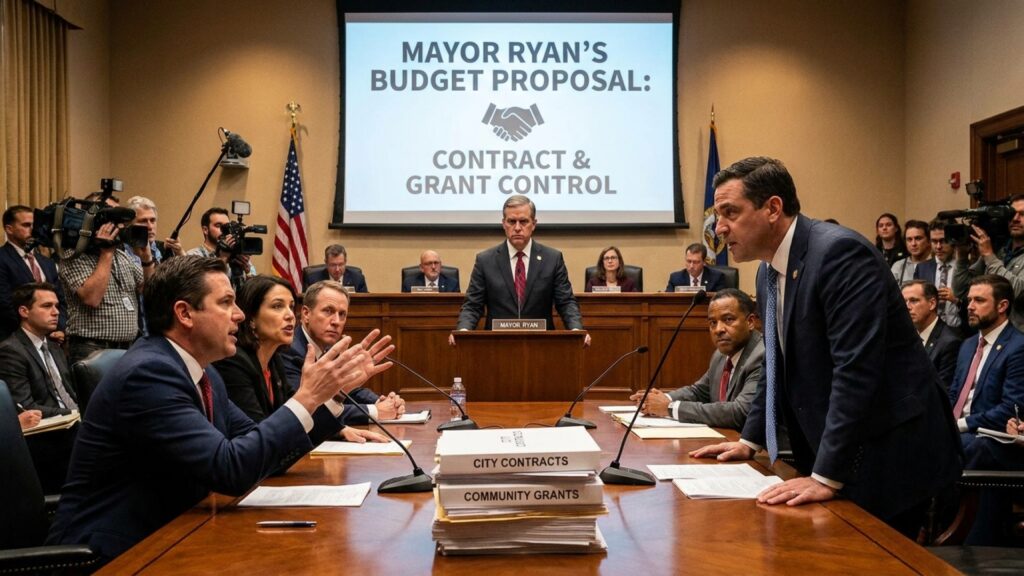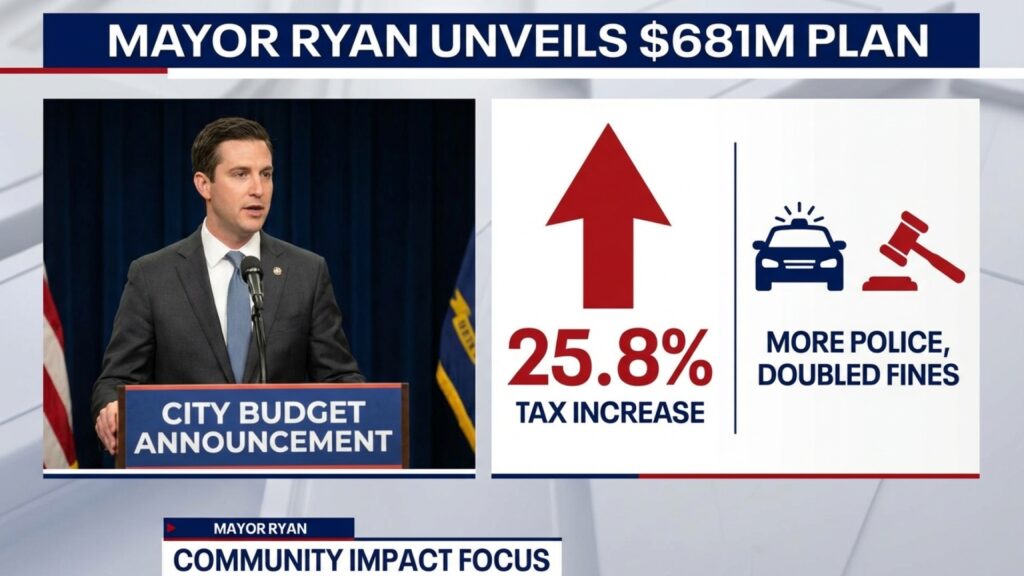
The Buffalo Common Council has officially entered a period of intense fiscal scrutiny following the submission of Mayor Sean Ryan’s proposed budget for the 2026–2027 fiscal year. This $681 million spending plan represents a pivotal attempt by the Ryan Administration to bridge a staggering $109 million deficit, a situation described by City Hall as a long-standing financial crisis that can no longer be deferred.
Navigating Buffalo’s Fiscal Shortfall
To address the significant budgetary gap, Mayor Ryan has outlined a multi-pronged strategy focused on aggressive revenue generation. The proposal moves away from temporary fixes in favor of structural changes. Key components of the plan include the implementation of new administrative fees, an overhaul of city fines, and a push for increased state aid. However, the most debated element is a proposed 25.8% increase to the city’s property tax levy.
According to the administration, these measures are essential to sustain core city services that residents rely on daily. This includes maintaining public safety standards, ensuring efficient snow removal during Western New York’s harsh winters, and funding critical infrastructure upgrades. The administration argues that without this revenue, the city’s financial stability remains at risk.
Below is a breakdown of the primary revenue and expenditure focuses within the 2026-2027 proposal:
| Category | Proposed Change/Action |
|---|---|
| Total Spending | $681 Million |
| Property Tax Levy | 25.8% Increase |
| Budget Deficit | $109 Million Gap Reduction |
| Core Services | Public Safety, Snow Removal, & Infrastructure |
| Revenue Streams | New Fees, Fines, and State Aid Requests |
Mixed Reactions from the Common Council
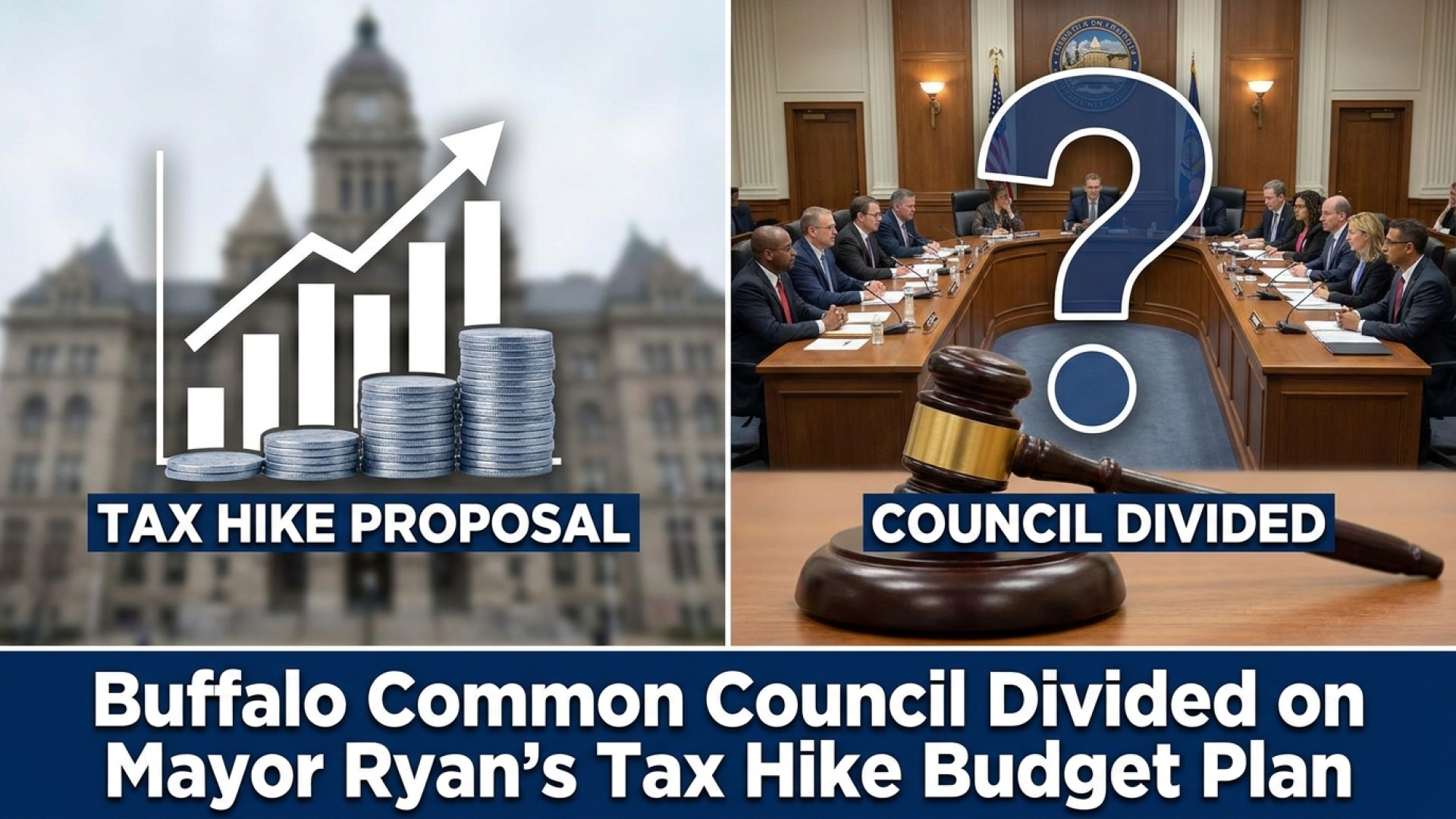
The reception within the Common Council chambers has been far from uniform. Councilmember Joseph Golombek was vocal in his opposition, characterized the tax hike as “unconscionable” for the city’s residents. Similarly, Councilmember Christopher Scanlon, who has been deeply involved in previous fiscal cycles, expressed skepticism regarding the scale of the increase, suggesting that alternative fiscal routes must be explored to protect taxpayers.
In contrast, Councilmember Mitch Nowakowski took a more pragmatic, albeit cautious, stance. He emphasized that the city has historically underfunded essential services and that a revenue increase is a necessary step toward modernization. However, Nowakowski also raised concerns regarding the “trickle-down” effect on Buffalo’s rental market. He noted that landlords are likely to pass these increased costs onto renters, potentially exacerbating housing affordability issues in the region.
Mayor Ryan has clarified that the property tax impact will be proportional to property values, meaning owners of higher-value real estate will see more significant increases than those in lower-valued neighborhoods.
The Road to July 1: Hearings and Public Dialogue
As part of our commitment to investigative reporting at the Lake Erie Times, we will continue to monitor the upcoming budget hearings. This phase will involve intensive negotiations between the Mayor’s office and the Common Council, alongside scheduled public input sessions where residents can voice their concerns.
The Council has until the start of the new fiscal year on July 1 to finalize the spending plan. For residents of Buffalo and the broader Western New York area, the outcome of these negotiations will dictate the quality of city services and the cost of living in the Queen City for years to come.
For more updates on local government and Buffalo’s economy, stay tuned to Lake Erie Times.