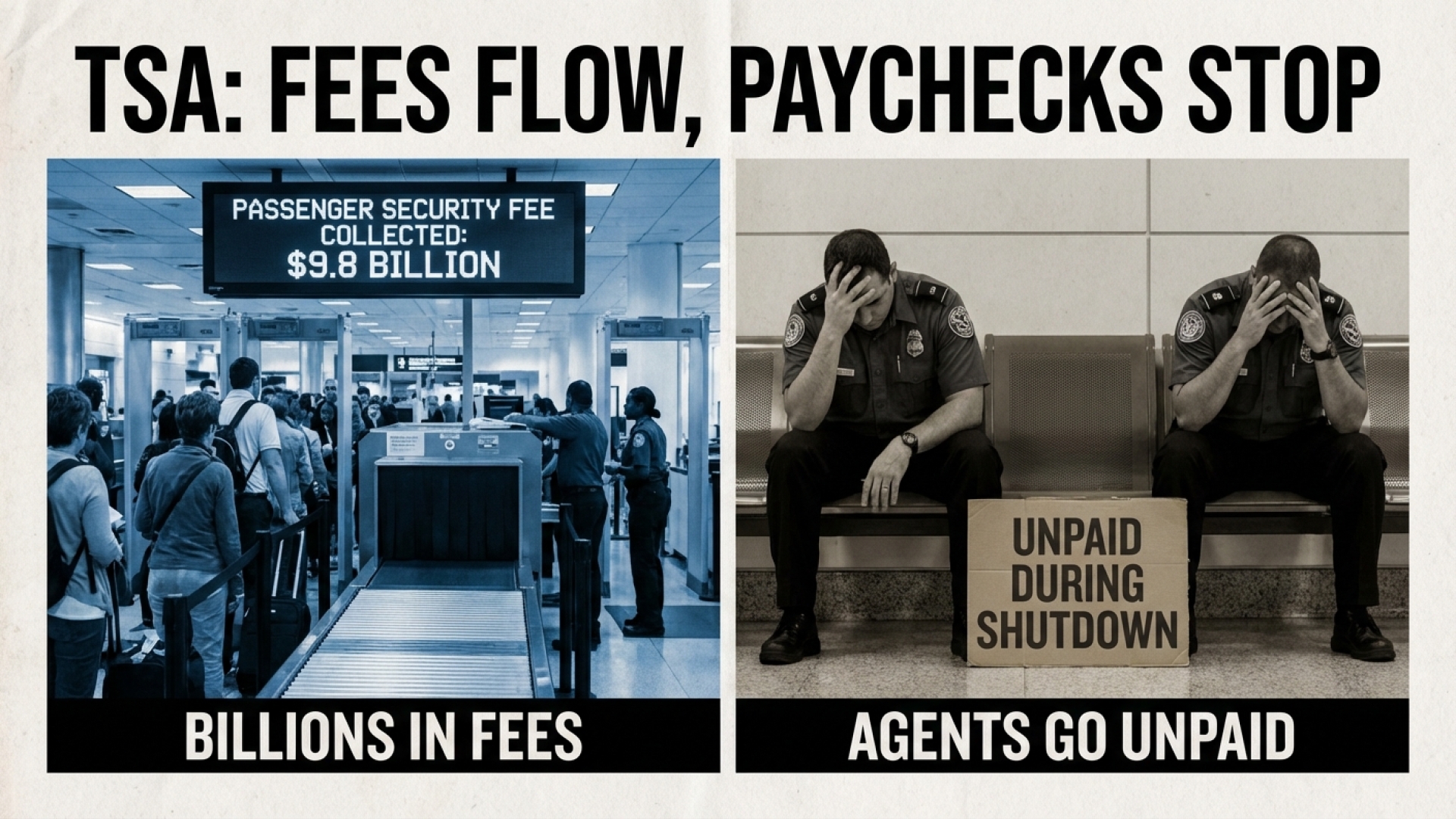
While passengers departing from Buffalo Niagara International Airport and hubs across the country continue to pay the mandatory September 11 Security Fee with every ticket purchase, a growing disconnect remains between the revenue generated and the support provided to those on the front lines. As Western New York travelers navigate the complexities of the current aviation landscape, Lake Erie Times has found that despite the collection of these fees, federal funding structures often leave local operations and personnel in a precarious position.
Air carriers are responsible for collecting these charges and remitting them to the Transportation Security Administration (TSA). Originally mandated by Congress to offset the costs of securing the nation’s aviation system, these fees were intended to ensure that both commerce and travelers remain safe. However, for many local news observers, the allocation of these funds raises significant questions about federal priorities.
Where Does the Security Fee Actually Go?
Currently, passengers are charged $5.60 per one-way trip, with a round-trip cap set at $11.20. On a national scale, these figures are staggering; the TSA projects these fees will total more than $4.5 billion in 2025. Yet, in a revelation that warrants closer investigative scrutiny, only approximately $250 million of that total is directed back to the TSA for its operational needs.
This discrepancy is rooted in the 2013 Bipartisan Budget Act, which mandated that a significant portion of these security fees be redirected to the general fund to reduce the federal budget deficit. Because Congress maintains sole authority over the allocation of this revenue, the TSA lacks the autonomy to reinvest these “security” dollars into its own workforce or infrastructure. Under the Department of Homeland Security, the agency’s budget remains classified as discretionary spending, leaving it vulnerable during political stalemates.
Remittance Timelines for Air Carriers
The flow of capital from the traveler to the government follows a strict regulatory schedule. Under 49 CFR § 1510.13(a), direct and foreign air carriers must remit all collected fees to the TSA by the final calendar day of the month following their collection. For instance, fees collected during a busy December travel season in Western New York must be handed over to the federal government no later than January 31.
The Human Cost: Unpaid Agents and Airport Disruptions
The impact of federal budget disputes is felt most acutely by the men and women staffing security checkpoints. During periods of government shutdowns, TSA agents are often required to work without immediate pay. This has historically led to increased financial hardship, resulting in higher rates of call-outs and “no-shows” as officers struggle to cover basic living expenses like rent and groceries.
When staffing levels drop, the consequences for the Western New York community and travelers nationwide are immediate. Increased absenteeism forces the consolidation of security lanes and, in extreme cases, the temporary closure of entire checkpoints. While major hubs like Houston’s George Bush Intercontinental and Philadelphia International have faced significant disruptions and terminal redirections, the ripple effects are felt in the interconnected web of regional travel.
Airline Assistance and Passenger Protections
To mitigate the impact of long wait times and staffing shortages, several major airlines have implemented temporary relief policies for affected passengers. The following table outlines current assistance measures:
| Airline | Policy & Assistance Details |
|---|---|
| United Airlines | Waiving change fees and fare differences for select hubs; offering rescheduling options or alternative airport departures (e.g., Austin or Dallas). |
| Delta Air Lines | Providing waived rebooking fees for travelers impacted by excessive security lines at major hubs; allowing rescheduling within a specific grace period. |
| Allegiant Air | Allowing customers to change or cancel itineraries without penalty until the conclusion of federal funding uncertainty. |
At Lake Erie Times, we recommend that all Western New York travelers check their specific carrier’s “travel alerts” page at least 24 hours before heading to the airport. For more updates on how national policy affects our regional infrastructure, visit our politics and business sections.
Detailed reporting for this story was provided by William Strasmore, dedicated to uncovering the regional impacts of national issues.