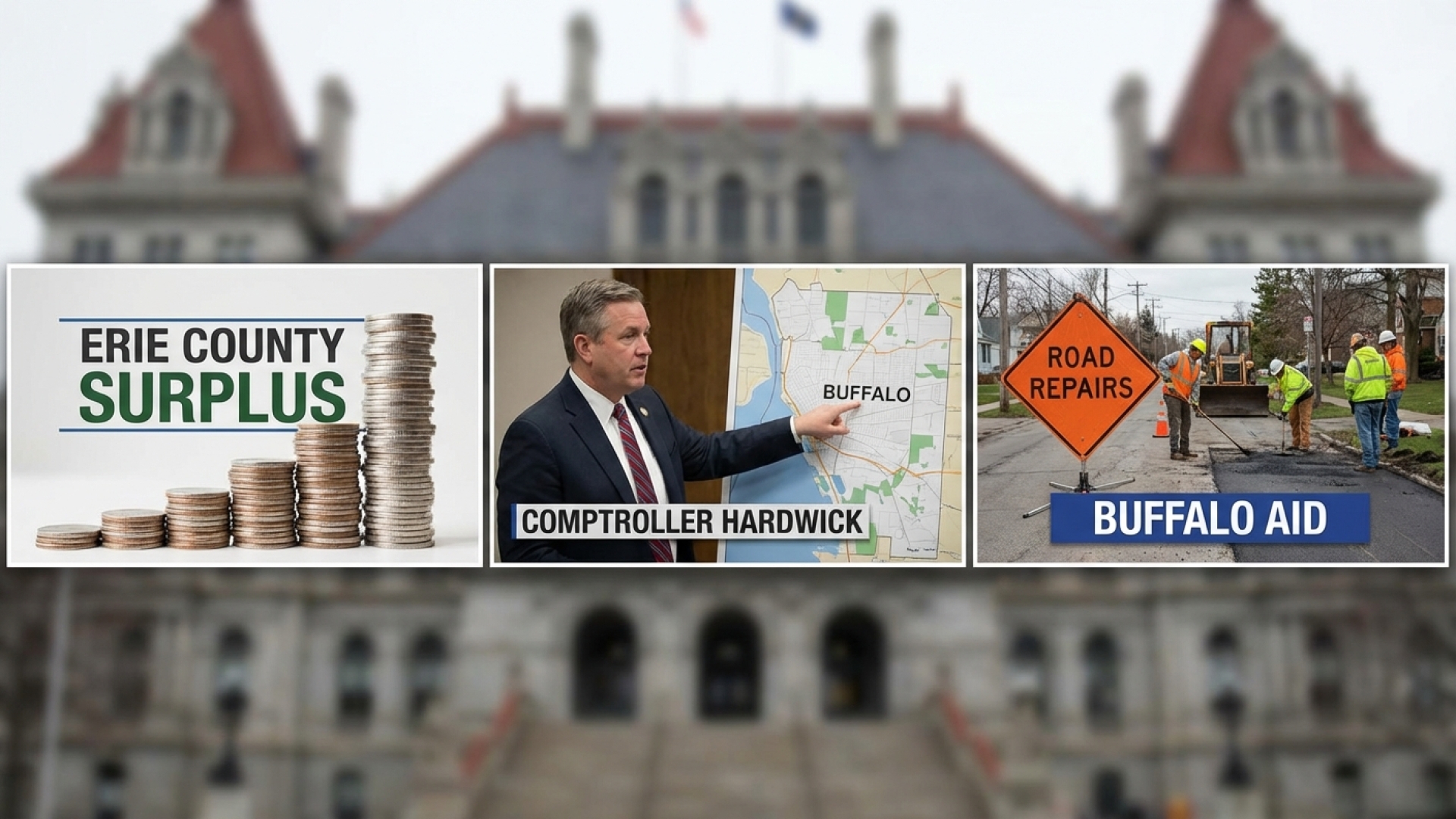
Erie County Comptroller Kevin Hardwick has submitted a pivotal proposal to the County Legislature, calling for the strategic distribution of a multi-million dollar surplus. As the City of Buffalo grapples with significant fiscal hurdles, Hardwick’s initiative seeks to leverage the county’s current financial strength to bolster infrastructure, support local municipalities, and secure long-term stability for Western New York.
Breaking Down the Erie County Financial Surplus
While many urban centers across the region face tightening budgets, Erie County is reporting a period of notable financial health. Comptroller Hardwick attributes this robust position primarily to higher-than-projected sales tax revenues throughout 2025. Though final figures are still being tallied, preliminary estimates place the Erie County surplus between $25 million and $30 million. While Hardwick stops short of calling the figures “record-breaking,” the windfall provides a rare opportunity for targeted regional reinvestment.
The Three-Pronged Allocation Strategy
In a formal communication to the Legislature, Hardwick outlined a vision to divide the surplus into three distinct categories. His initial recommendation suggests an even one-third split, though he acknowledges that the final decision remains within the Legislature’s jurisdiction. The plan focuses on critical local news priorities that affect every resident in the county.
| Priority Area | Focus Benefit | Estimated Allocation |
|---|---|---|
| Road Infrastructure | Repairing pothole damage from winter | ~$8.3M – $10M |
| Municipal Aid | Support for Buffalo, Lackawanna, and Tonawanda | ~$8.3M – $10M |
| Rainy Day Fund | Long-term fiscal resilience and reserves | ~$8.3M – $10M |
Restoring Western New York’s Roadways
A primary concern for the Comptroller is the deteriorating state of the region’s infrastructure. Following what Hardwick described as a “brutal” winter, the prevalence of potholes on county roads has reached a critical point. By directing a significant portion of the surplus toward highway maintenance, the county can address safety concerns and reduce long-term repair costs for taxpayers. This move is seen as essential for maintaining the community connections that drive the local economy.
Financial Lifelines for Buffalo, Lackawanna, and Tonawanda
Hardwick’s proposal includes a specific focus on “urban initiatives,” a concept he championed during his previous tenure in the Legislature. Cities like Buffalo, Lackawanna, and Tonawanda host numerous county-owned facilities that do not generate property tax revenue, creating a unique fiscal burden for these municipalities.
If the proposed split is approved, approximately $10 million would be earmarked for municipal finances across these three cities. This aid is intended to compensate for services provided to county buildings and to help Buffalo navigate its current business and budgetary pressures. Hardwick emphasizes that these funds would serve as a vital “aid in lieu of services” to ensure regional balance.
Securing the Future: The Rainy Day Fund
Beyond immediate spending, the Comptroller is advocating for a conservative approach to future uncertainties. With shifting federal aid landscapes and potential economic fluctuations, Hardwick urged the Legislature to bolster the county’s “rainy day fund.” Strengthening these reserves is framed as a necessary step to ensure fiscal stability for Erie County in the years to come, protecting residents from sudden tax hikes or service cuts during a downturn.
Political Headwinds: Poloncarz Expresses Reservations
Despite the potential benefits of the plan, it faces significant opposition from the executive branch. County Executive Mark Poloncarz has voiced skepticism regarding the redistribution of sales tax revenue. In a recent statement, Poloncarz warned that the move could be counterproductive, suggesting that suburban residents might demand a larger share of the pie if the city receives a specific allocation.
As the debate moves to the Legislature, the Lake Erie Times will continue to monitor how these local political dynamics will shape the final distribution of the surplus and what it means for the taxpayers of Western New York.
For more in-depth reporting on community issues, visit the William Strasmore author page.
Disclaimer: The content provided by Lake Erie Times is for informational purposes only and should not be considered as professional legal or financial advice.