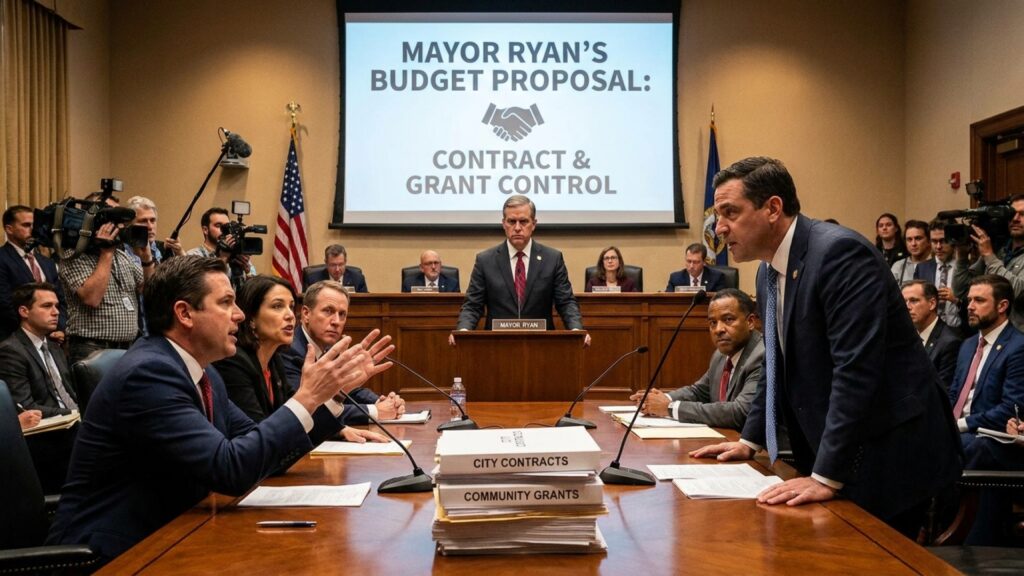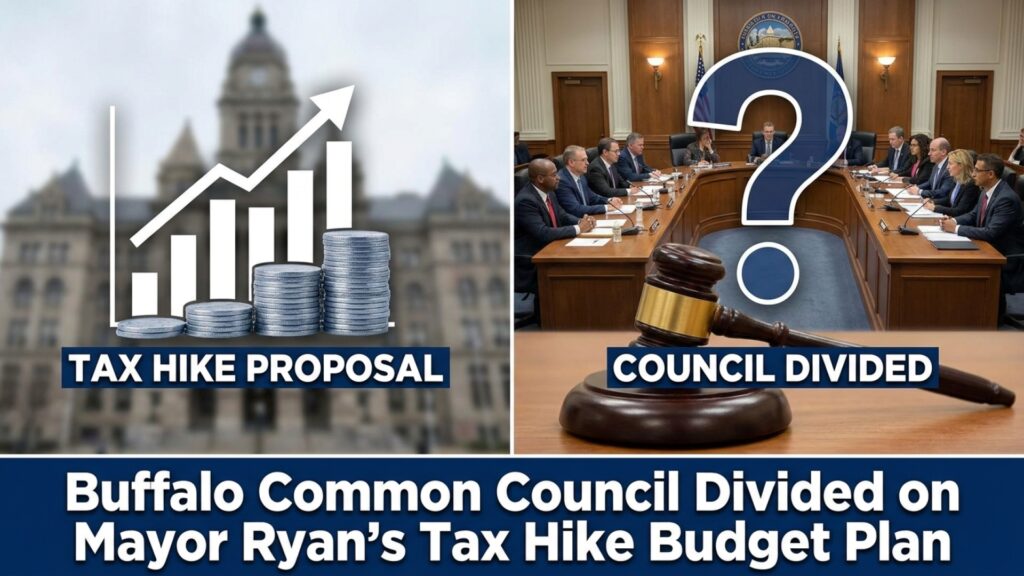
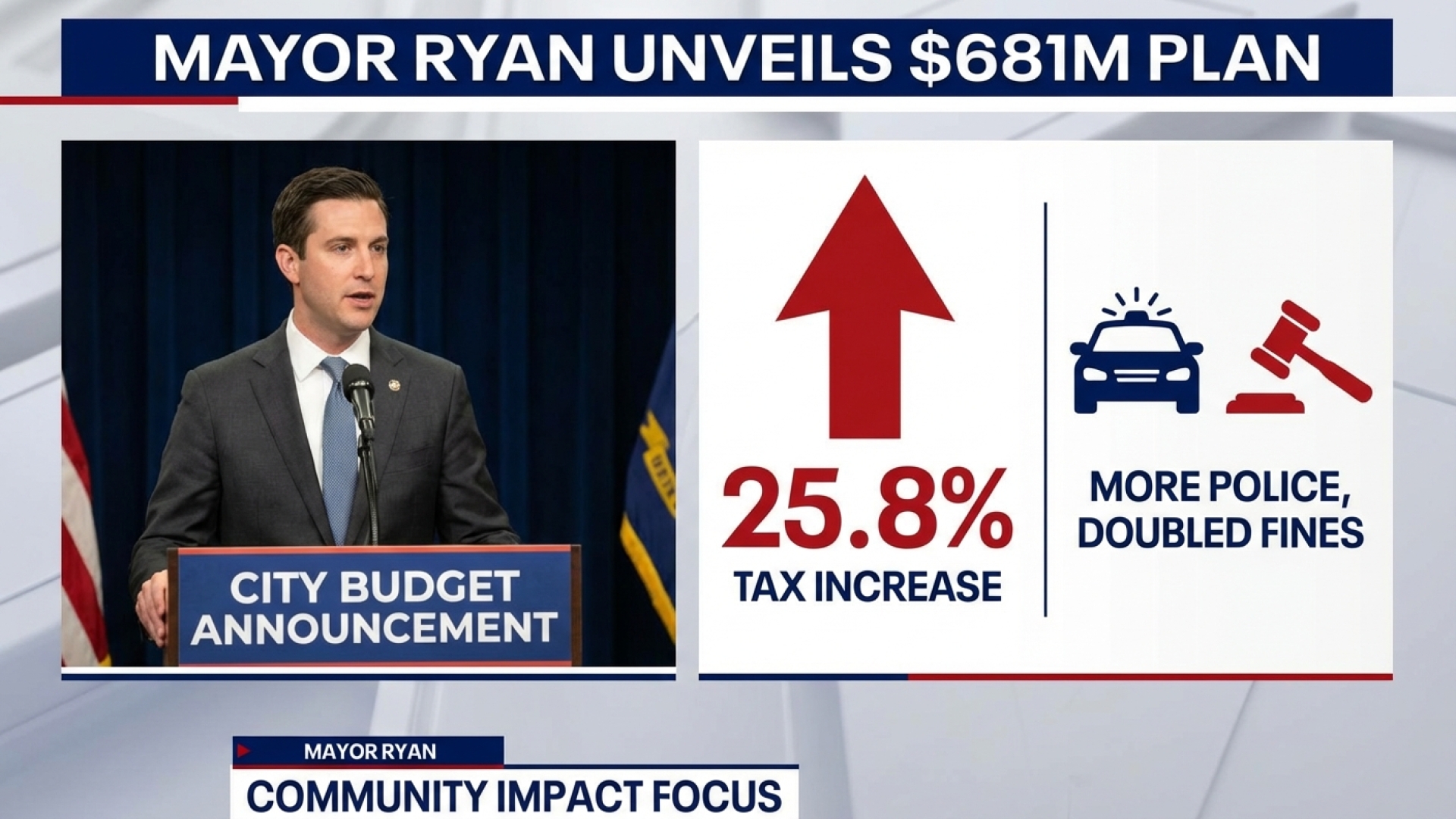
BUFFALO, N.Y. – In a move that signals a significant shift in the city’s financial management, Mayor Sean Ryan has unveiled his inaugural budget proposal for fiscal year 2026-2027. Totaling $681 million, the plan seeks to stabilize Buffalo’s fiscal foundation while addressing long-standing structural issues. However, the path to solvency comes with a notable cost for residents: a proposed 25.8% increase in the property tax levy.
Confronting the $109 Million Structural Deficit
As reported by Lake Erie Times, Mayor Ryan’s proposal is designed to tackle a daunting $109 million structural deficit. Ryan characterized the gap as the result of “years of imbalanced budgeting” by previous administrations. To navigate this shortfall, the administration is moving beyond simple cuts, employing a multi-pronged strategy that includes aggressive collection efforts, proceeds from in-rem foreclosures, and expected increases in state aid. These initiatives are projected to whittle the deficit down to roughly $45 million before accounting for the new property tax adjustments.
Understanding the Property Tax Impact
The 2026-2027 budget introduces a homestead tax rate of $8.01 per $1,000 of assessed value, while non-homestead (commercial) properties will see a rate of $15.17 per $1,000. This adjustment aims to generate a tax levy of $225.6 million, a sharp rise from the previous year’s $179.4 million.
While the 25.8% percentage sounds substantial, Mayor Ryan’s office provided a breakdown of the actual monthly impact on Buffalo homeowners. According to the Mayor, nearly two-thirds of city residents will see their monthly payments increase by less than $25, and approximately 20% of homeowners will experience an increase of less than $15. Furthermore, the administration pointed out that Buffalo remains one of the most affordable municipalities in the Western New York region regarding property tax burdens.
To mitigate the burden on vulnerable populations, the city is launching a targeted outreach campaign. Data indicates that nearly 60% of eligible residents are not currently enrolled in relief programs like the NYS STAR program or specific exemptions for veterans and seniors. For more updates on local government initiatives, visit our Politics section.
Aggressive Revenue Projections: Fines and Assets
A cornerstone of Ryan’s fiscal strategy involves doubling the revenue generated from fines and penalties. The budget anticipates collecting $20.5 million—up from $10.6 million last year—by ramping up enforcement for traffic violations, parking infractions, and bus arm safety violations. Additionally, the city expects a one-time infusion of $15.15 million from the sale of city-owned parking ramps to the Buffalo Parking and Mobility Authority, a move intended to streamline city assets.
Departmental Spending Breakdown
The proposed budget reallocates resources across several key divisions, prioritizing public safety and infrastructure while trimming administrative overhead. Below is a breakdown of the most significant changes:
| Department/Division | Budget Change | Total Allocation/Details |
|---|---|---|
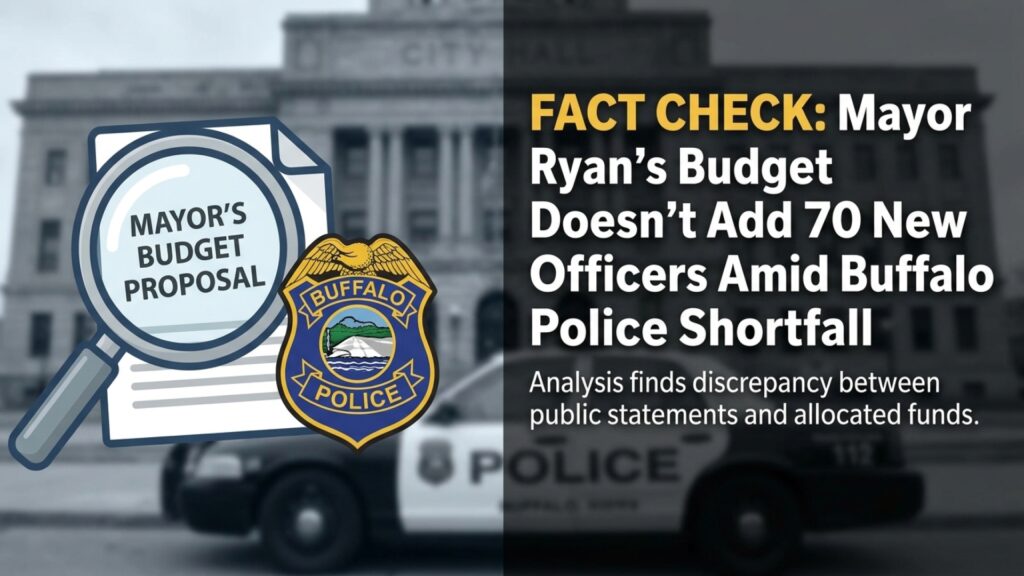
| Buffalo Police Department | +13% Increase | $120 Million (includes 74 new sworn officers) |
| Street Sanitation | +67.9% Increase | $18.3 Million |
| Buffalo Fire Department | +7.5% Increase | $78.2 Million |
| Buildings and Engineering | +$9.9M Increase | Infrastructure maintenance and upgrades |
| Mayor’s Office | +$1.24M Increase | Includes $1M for salaries and $140k for special events |
| Telecom/Utilities/Franchise | -100% (Eliminated) | $575,000 in savings |
| Comptroller’s Office | Decrease | Budget reduction of $280,000 |
| Community Services | Decrease | Budget reduction of $248,000 |
The Path Forward for Buffalo
William Strasmore, reporting for the Lake Erie Times, notes that while the budget addresses the city’s immediate fiscal crises, it also sets a precedent for how the Ryan administration handles long-term economic transparency. The focus on “corrective” budgeting marks a departure from previous strategies that relied on depletion of reserves or one-time federal pandemic relief funds.
The Buffalo Common Council will formally receive the budget proposal during a special meeting this Wednesday. Residents interested in providing feedback or learning more about the fiscal plan are encouraged to attend a public hearing scheduled for Thursday, April 23rd. Stay tuned to our local news coverage for updates on the specific time and location of the hearing.
For more in-depth reporting and investigative analyses on Western New York community affairs, visit the author profile of William Strasmore.
Disclaimer: The content provided by Lake Erie Times is for informational purposes only and should not be considered as professional legal or financial advice.
Affiliate Disclaimer: Some links on Lake Erie Times are affiliate links. This means that if you make a purchase through these links, we may earn a commission at no additional cost to you. Our recommendations are based on careful research and our commitment to quality journalism.