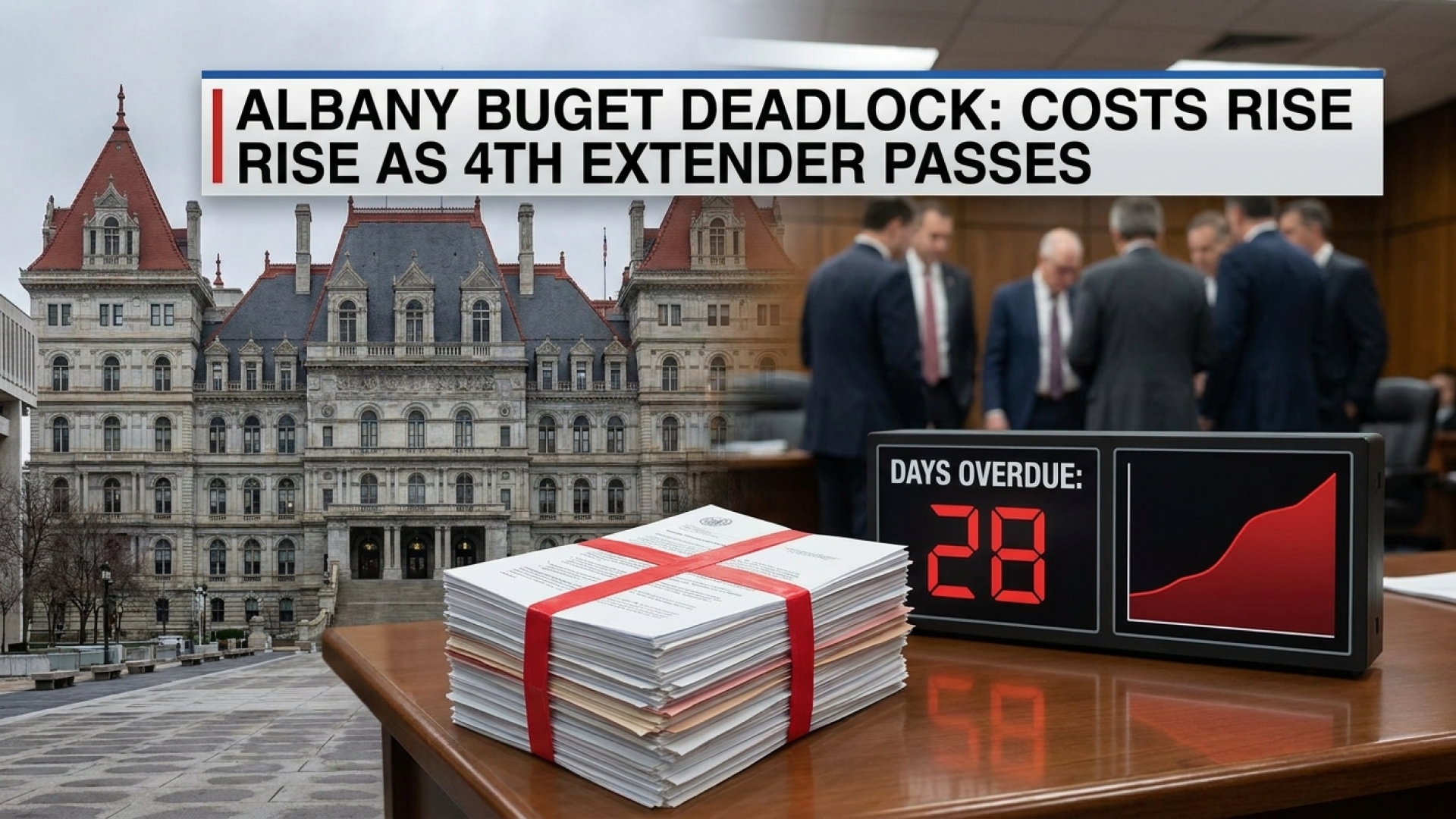
As the April 1 deadline recedes further into the rearview mirror, Western New York taxpayers are left watching a familiar scene of legislative inertia in Albany. On Thursday, state lawmakers convened for a session that lasted a mere 20 minutes—just long enough to pass a fourth budget extender and ensure that the gears of government continue to turn, albeit at a significant cost to the public.
This latest stopgap measure comes as negotiations over Governor Kathy Hochul’s proposed $260 billion spending plan remain stalled. While the Governor, the State Senate leader, and the Assembly speaker continue their “three men (and women) in a room” style of governance, the lack of transparency is drawing sharp criticism from representatives across the region.
Gridlock Over High-Stakes Policy
The stalemate isn’t just about the numbers; it’s about deep-seated disagreements on policy shifts that could reshape life in Buffalo and beyond. Republican minority lawmakers have been pressing for clarity on several contentious issues, including adjustments to state climate laws, changes to auto insurance mandates, and revisions to environmental review policies.
During a brief Senate session at the State Capitol, Ranking Republican State Senator Tim O’Mara sought updates on the Governor’s proposal to streamline the State Environmental Quality Review (SEQR) program—a move intended to accelerate housing development. The response from Deputy Democrat Leader Michael Gianaris was a blunt “No,” signaling that a resolution is nowhere in sight.
“Not a lot of helpful information for us, as usual, on these budget extenders,” Senator O’Mara remarked on the Senate floor. “More importantly, there is no information for the citizens of New York state on what is really being discussed behind closed doors.”
The Rising Price of Delay
While the $79 million extender keeps state services operational, the logistical cost of the delay is mounting. Although lawmakers do not receive their $142,000 base salaries until a final budget is ratified, they continue to collect per diems for travel, lodging, and meals every time they are called back to Albany.
Assemblyman Steve Hawley, who represents District 139 in Albion, provided a stark breakdown of the fiscal impact on Western New York residents. According to Hawley, the cost of calling all 213 legislators back to session for such brief periods is staggering.
| Expense Category | Estimated Cost |
|---|---|
| Daily Cost for Full Legislative Session | Approx. $100,000 |
| Total Legislative Reimbursements to Date | $360,000+ |
| Proposed Total State Budget | $260 Billion |
“We were called back into session for 20 minutes today,” Hawley noted. “The amount of money spent just to be here when we weren’t scheduled is a direct burden on the taxpayers.”
Impact on Western New York
For the Lake Erie Times audience, these delays mean more than just political theater. The final budget will dictate funding for local schools, infrastructure projects in Buffalo, and the implementation of climate initiatives that affect our regional economy. As the deadlock continues, the lack of a finalized fiscal plan creates uncertainty for local municipalities and small businesses throughout the region.
Our team at the Lake Erie Times will continue to monitor the proceedings in Albany to provide impartial, in-depth coverage of how these decisions—or the lack thereof—impact the Western New York community.
Disclaimer: The content provided by Lake Erie Times is for informational purposes only and should not be considered as professional legal or financial advice.
Affiliate Disclosure: Some links on Lake Erie Times are affiliate links. This means that if you make a purchase through these links, we may earn a commission at no additional cost to you. Our recommendations are based on careful research and our commitment to quality journalism.