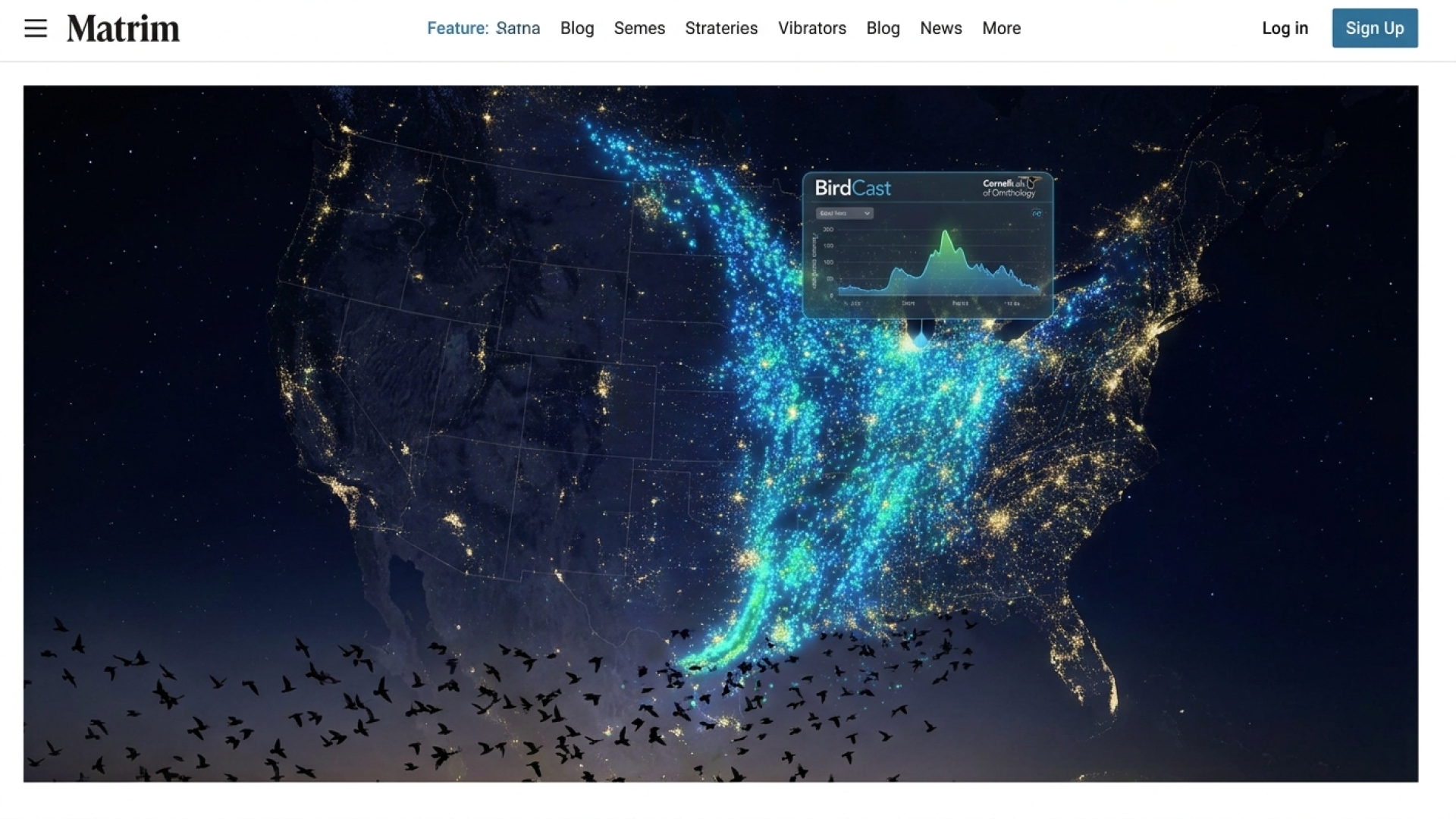
As spring migration gains momentum, millions of birds are charting their course northward across the United States. For residents of Buffalo and the broader Western New York region, this spectacular seasonal journey is closer than many realize—occurring largely under the cover of darkness. This massive movement is currently being tracked with precision using Cornell University’s BirdCast data, providing a rare glimpse into the nocturnal habits of our avian visitors.
The Silent Symphony of Nocturnal Migration in Western New York
While local birdwatchers often seek out sightings during the day, the vast majority of these arduous flights happen after the sun sets over Lake Erie. Research from the Cornell Lab of Ornithology indicates that nearly 80% of bird species prefer migrating at night. This nocturnal strategy serves several purposes: it allows birds to avoid daytime predators, take advantage of cooler, more stable air for efficient flight, and navigate using celestial cues.
Dr. Adriaan Dokter, a research associate at Cornell, highlights the staggering scale of this activity right here in our backyard. “In Erie County, for example, only last Sunday I saw there were like 1.2 million birds flying over that little county only in a single night,” Dr. Dokter stated. These figures underscore a massive biological phenomenon happening directly above the Queen City while its residents sleep.
Tracking Local Movements with BirdCast Data
For those following local news regarding our environment, Cornell’s BirdCast provides invaluable real-time insights. In Western New York, current data suggests a transition from low to medium levels of overnight activity. As the season progresses and temperatures stabilize, these numbers are expected to surge, marking a critical period for local conservation and awareness.
Understanding these patterns is more than just a matter of curiosity; it is essential for community planning and environmental stewardship. Increased migration activity often prompts calls for “Lights Out” initiatives to prevent birds from becoming disoriented by urban light pollution—a common issue in metropolitan areas like Buffalo.
How to Observe the Migration
If you are interested in the analytics behind these avian journeys, live migration maps offer a transparent look at the data. Residents can monitor the density and direction of flight patterns to better understand when the peak migration will hit the Lake Erie shoreline.
To view the current bird migration maps and gain a deeper understanding of these incredible journeys, you can visit the official BirdCast website. For more updates on community events and regional environmental reporting, stay tuned to our dedicated coverage.
About the Author: William Strasmore is a veteran news reporter for the Lake Erie Times, specializing in investigative journalism and in-depth analysis of community affairs and regional dynamics in Western New York.
Disclaimer: The content provided by Lake Erie Times is for informational purposes only and should not be considered as professional legal or financial advice. Some links on our site may be affiliate links; we may earn a commission at no additional cost to you, supporting our commitment to quality local journalism.