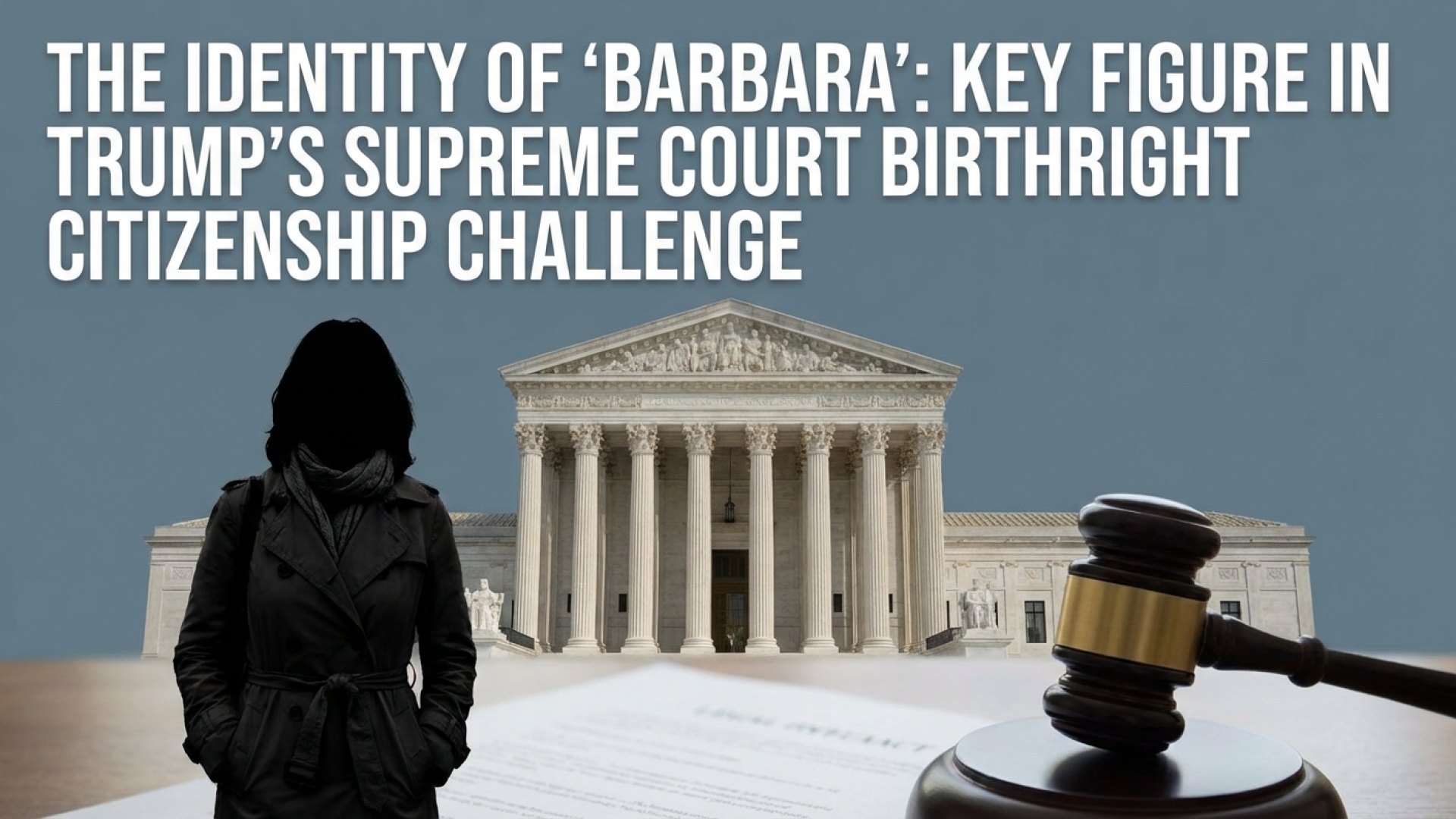
As the legal landscape surrounding the 14th Amendment undergoes intense scrutiny, the name “Barbara” has emerged at the forefront of a pivotal national debate. The Supreme Court case, Trump v. Barbara, stands to redefine birthright citizenship in the United States, a topic with profound implications for immigrant communities from New Hampshire to Western New York. For residents in Buffalo and the surrounding region, where cross-border dynamics and immigration policy are frequent points of discussion, understanding the woman behind this landmark case is essential.
Who is “Barbara”?
While her legal identity is shielded to ensure her safety, “Barbara” is the pseudonym for a mother of three currently residing in New Hampshire. Her journey to the U.S. began in 2024, when she fled the violence of the Mara 18 gang in Honduras. Seeking asylum alongside her husband and children, she sought the safety and stability that the American legal system has historically provided to those escaping persecution.
In early 2025, Barbara’s personal circumstances collided with a seismic shift in federal policy. Following his second inauguration on January 20, 2025, Donald Trump signed an executive order targeting the established interpretation of the 14th Amendment. The order argued that citizenship should be denied to children born on U.S. soil if their parents were “unlawfully present.” Having discovered she was pregnant in February 2025, Barbara found herself directly in the crosshairs of this constitutional challenge.
A Landmark Legal Challenge
The American Civil Liberties Union (ACLU) quickly moved to represent Barbara, filing a petition in the U.S. District Court for the District of New Hampshire. In her anonymous declaration, Barbara detailed a future rooted in fear. Her primary concern remained the safety and legal status of her unborn child, emphasizing that access to education and the right to work are fundamental to breaking the cycle of poverty and violence her family fled.
Barbara is not alone in her quest for anonymity. Several other plaintiffs—including “Sarah,” the daughter of a Taiwanese citizen; “Susan,” a resident of Utah; and “Mark,” a Brazilian citizen in Florida—have sought to keep their identities private, citing fears of retaliation. This collective push for privacy highlights the high stakes and polarized nature of the current immigration discourse.
Timeline of the Trump v. Barbara Case
| Date | Event |
|---|---|
| January 20, 2025 | Executive order signed to restrict birthright citizenship. |
| February 2025 | Barbara discovers pregnancy; ACLU initiates legal action. |
| Mid-2025 | U.S. District Court judge issues injunction against the order. |
| October 5, 2025 | Anticipated due date for Barbara’s child. |
A U.S. district court judge ultimately sided with Barbara and the ACLU, granting an injunction that temporarily halted the administration’s order. As the case moves toward the Supreme Court, the outcome will likely set a precedent that affects thousands of families, including those within the Western New York community. William Strasmore and the Lake Erie Times team will continue to provide in-depth analysis as this case progresses through the highest levels of the judiciary.
About the Author: William Strasmore is a dedicated news reporter in Western New York who delivers in-depth, impartial coverage and incisive analyses on local and national issues. With a background in investigative journalism, William is committed to uncovering the truth and keeping the Buffalo community informed.
Disclaimer: The content provided by Lake Erie Times is for informational purposes only and should not be considered as professional legal or financial advice. Some links on Lake Erie Times are affiliate links. If you make a purchase through these links, we may earn a commission at no additional cost to you. Our recommendations are based on careful research and our commitment to quality journalism.
Local News | Politics | Business | Community