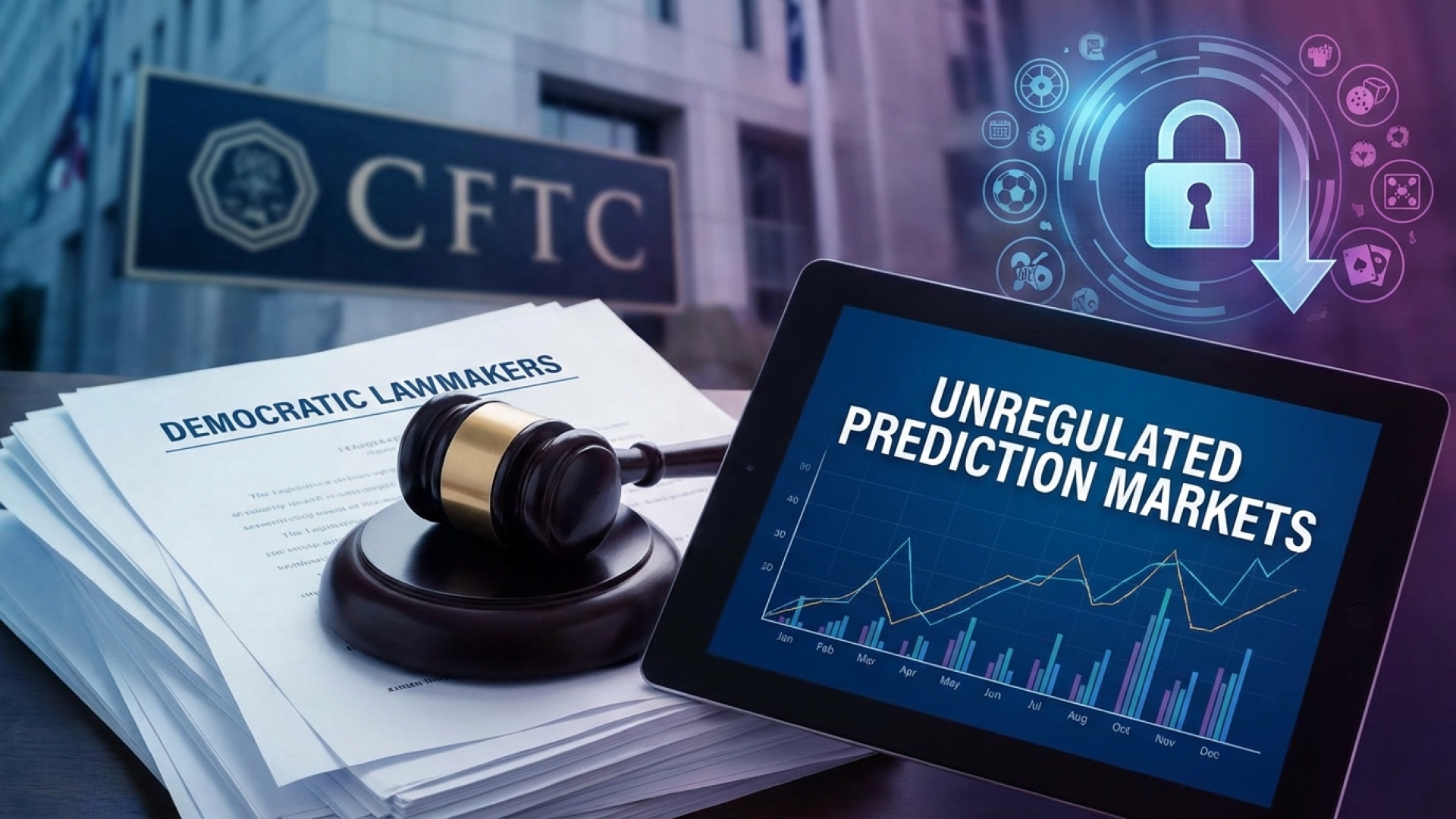
Democratic lawmakers are intensifying their call for stricter oversight on event-based betting platforms, urging the Commodity Futures Trading Commission (CFTC) to regulate these online exchanges more rigorously. This demand follows a series of controversies concerning the transparency and ethical implications of wagering on real-world geopolitical events.
For residents in Western New York, where interest in digital finance and online trading continues to grow, these regulatory shifts represent a significant turning point in how federal agencies oversee emerging financial technologies. As part of our commitment at the Lake Erie Times to provide in-depth analysis of community and national affairs, we are tracking how these federal decisions impact local investors.
Lawmakers Demand Oversight, Cite “Wild West” Environment
Seven Democratic members of Congress, led by U.S. Rep. Seth Moulton, D-Mass., recently addressed a formal inquiry to the CFTC. The group is pressing for enhanced supervision of prediction exchanges and thorough investigations into alleged insider trading. The correspondence critically describes these markets as an “unregulated ‘Wild West’,” citing specific instances of speculative betting during U.S. military actions in Venezuela and Iran as evidence of a systemic lack of supervision.
The lawmakers emphasized that the prevalence of contracts appearing to flout United States law is a primary concern. They have requested a formal response from the CFTC leadership by mid-April, signaling a high level of urgency regarding consumer protection and market integrity.
CFTC’s Counter-Stance and Regulatory Defense
Despite the mounting congressional pressure, the CFTC’s internal stance has been markedly different. The agency has previously asserted its federal authority by filing lawsuits against states attempting to ban these markets independently. CFTC Chairman Michael S. Selig has publicly pushed back against the “Wild West” label.
In a recent statement, Selig argued that these exchanges are not lawless frontiers but are instead self-regulatory organizations. According to the Chairman, these platforms are examined and supervised by experienced CFTC staff to ensure they meet federal standards, though critics argue those standards are currently insufficient for the complexity of the digital age.
Market Comparison: Key Regulatory Challenges
The following table outlines the primary differences between the legislative perspective and the regulatory stance currently held by the CFTC.
| Issue | Congressional Viewpoint | CFTC Perspective |
|---|---|---|
| Market Status | Unregulated “Wild West” | Supervised self-regulatory organizations |
| Main Concern | Insider trading and ethics | Federal jurisdiction and market stability |
| Action Required | Stricter oversight and bans on specific contracts | Continuous examination by existing staff |
Controversial Wagers and High-Profile Connections
The debate surrounding these speculative platforms escalated following an incident on Polymarket, where users were permitted to wager on the rescue status of a U.S. airman in Iran. This specific market drew sharp bipartisan criticism, eventually forcing the company to issue an apology.
Further complicating the political landscape are the high-profile figures tied to these platforms. Reports indicate that Donald J. Trump Jr. is an investor in Polymarket and also serves as an adviser to Kalshi, another prominent player in the prediction exchange sector. These connections have added a layer of political scrutiny to what was already a complex financial debate.
Understanding Prediction Markets
Prediction markets are digital platforms that facilitate the trading of contracts based on the outcome of future events. These outcomes can span several categories:
- Political elections and legislative votes
- Professional sports and athletic milestones
- Geopolitical developments and military actions
- Economic indicators and interest rate changes
Participants essentially purchase shares in a specific outcome. The price of these contracts fluctuates based on the collective expectations of the participants. While proponents argue these markets provide valuable data for forecasting, critics—including the lawmakers mentioned above—worry that they incentivize unethical behavior and provide a platform for gambling under the guise of financial innovation.
Reported by William Strasmore, Lake Erie Times. William is a dedicated news reporter in Western New York delivering in-depth coverage of local politics and regional business.
About Lake Erie Times: Lake Erie Times is your comprehensive source for the latest news, insights, and stories from Buffalo, New York, and the broader Western New York region. Our mission is to provide the community with accurate, in-depth, and engaging news coverage, fostering informed dialogue and strengthening connections within our region.
Disclaimer: The content provided by Lake Erie Times is for informational purposes only and should not be considered as professional legal or financial advice.
Affiliate Disclaimer: Some links on Lake Erie Times are affiliate links. This means that if you make a purchase through these links, we may earn a commission at no additional cost to you. Our recommendations are based on careful research and our commitment to quality journalism.