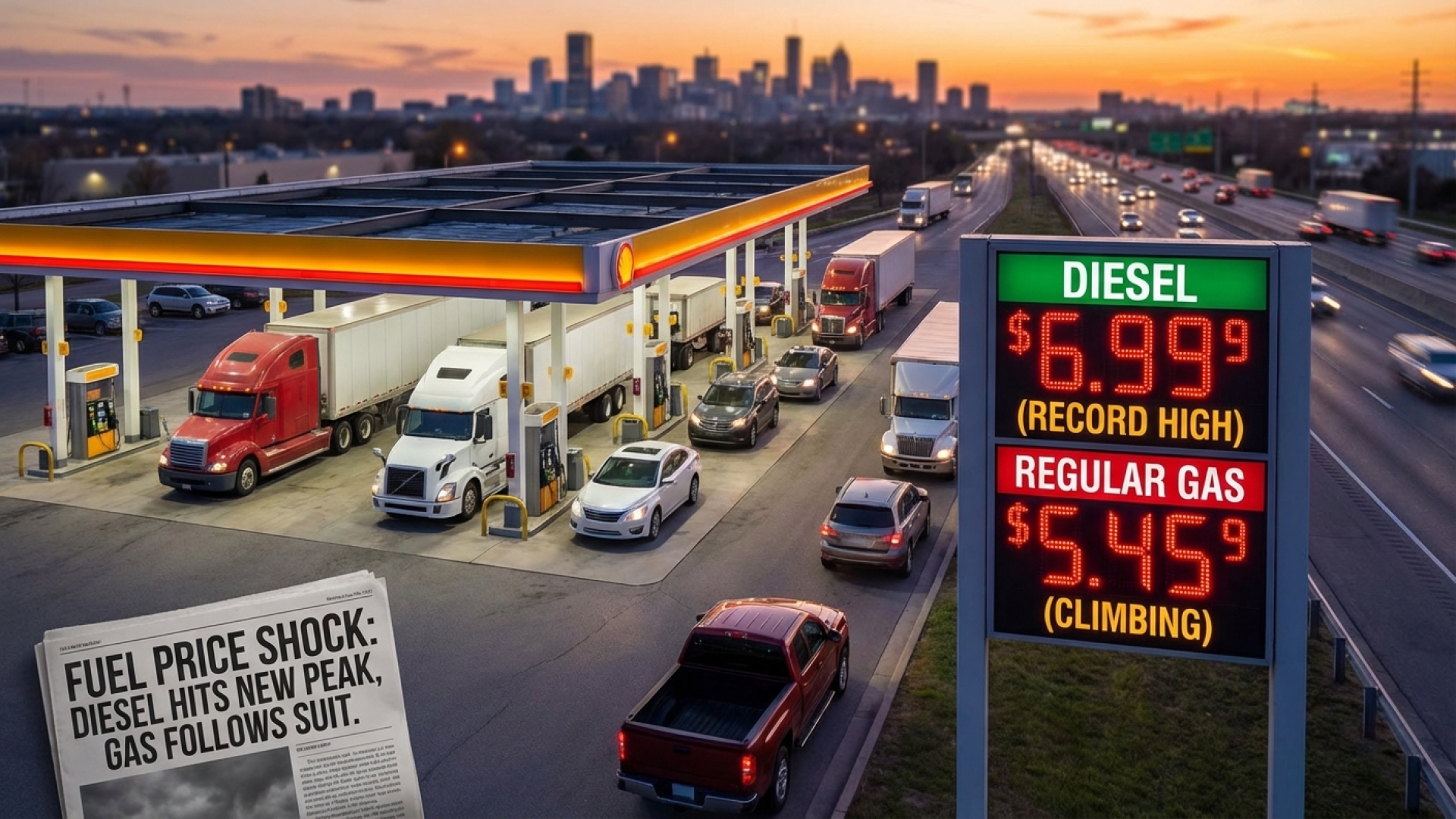
As the spring travel season gains momentum, drivers across Western New York are feeling the pinch at the pump. Gas prices continued their upward trajectory this Thursday, nudging the national average slightly higher while diesel prices surged toward record-breaking territory in several states.
According to the latest data, the national average for a regular gallon of gas reached $4.166 on Thursday, up from $4.164 the previous day. While the day-over-day increase was marginal, it reinforces a concerning trend for Buffalo residents who have seen prices climb steadily over the past month. However, market analysts suggest a potential reprieve may be on the horizon following Iran’s agreement to a two-week ceasefire and the reopening of trade routes in the Strait of Hormuz.
National Price Comparison
The geographic disparity in fuel costs remains stark. While the West Coast faces the highest burdens, the Great Plains continue to offer the most relief for motorists. The following table illustrates the current price landscape across the United States:
| Region/State | Avg. Regular Gas Price | Status |
|---|---|---|
| California | $5.929 | Highest in Nation |
| Hawaii | $5.633 | Extreme High |
| Washington | $5.402 | Extreme High |
| New York | $4.285 | Above National Avg. |
| North Dakota | $3.600 | Low |
| Kansas | $3.485 | Low |
| Oklahoma | $3.477 | Lowest in Nation |
Diesel prices have been even more volatile, reaching a national average of $5.689 per gallon—less than two cents away from the all-time national record. In California, diesel has already shattered records, peaking at an unprecedented $7.747 per gallon, a figure that threatens to ripple through the business sector and supply chains nationwide.
Geopolitical Tensions and the Local Economy
The catalyst for this recent spike was the military conflict involving the U.S., Israel, and Iran that escalated in late February. As an investigative reporter covering regional politics and global impacts, I’ve noted that the Middle East remains the primary driver of volatility for Western New York energy costs. Crude oil has hovered above $100 per barrel, directly inflating the cost of diesel, gasoline, and jet fuel.
The “Operation Epic Fury” campaign has disrupted the Strait of Hormuz, a vital artery where 20% of the world’s oil flows. While the recent two-week ceasefire has provided a temporary “cooling off” period for the markets, the White House has urged American consumers to remain patient. Press Secretary Karoline Leavitt stated on March 31 that once military operations are concluded, prices are expected to return to “multi-year lows.”
The Anatomy of Your Fuel Bill
For the average Buffalo commuter, understanding why prices fluctuate requires looking at the four major components of fuel costs. According to the U.S. Energy Information Administration, the breakdown is as follows:
- Crude Oil (50%): The largest variable, dictated by global supply and demand.
- Refining (20%): The cost of converting crude into usable gasoline.
- Taxes (20%): Federal, state, and local levies. New York consistently ranks among the higher-taxed states for fuel.
- Distribution & Marketing (10%): Operational costs for local retailers.
It is a common misconception that local gas station owners control these prices. Patrick De Haan of GasBuddy notes that retailers are “price takers, not makers,” often operating on thin margins of roughly 15 cents per gallon after overhead expenses like labor and transportation are settled.
Looking Ahead for Western New York
As we navigate the spring season, historical trends suggest that demand will continue to rise as families plan road trips. While the national record for gas ($5.00 in June 2022) remains unbroken for now, the local community should prepare for continued fluctuations until geopolitical stability is restored in the Persian Gulf.
For more in-depth reporting on local issues affecting Buffalo and the surrounding region, stay tuned to the Lake Erie Times.
The Associated Press contributed to this report.
Disclaimer: The content provided by Lake Erie Times is for informational purposes only and should not be considered as professional legal or financial advice. Some links on Lake Erie Times may be affiliate links; we may earn a commission at no additional cost to you based on our commitment to quality journalism.