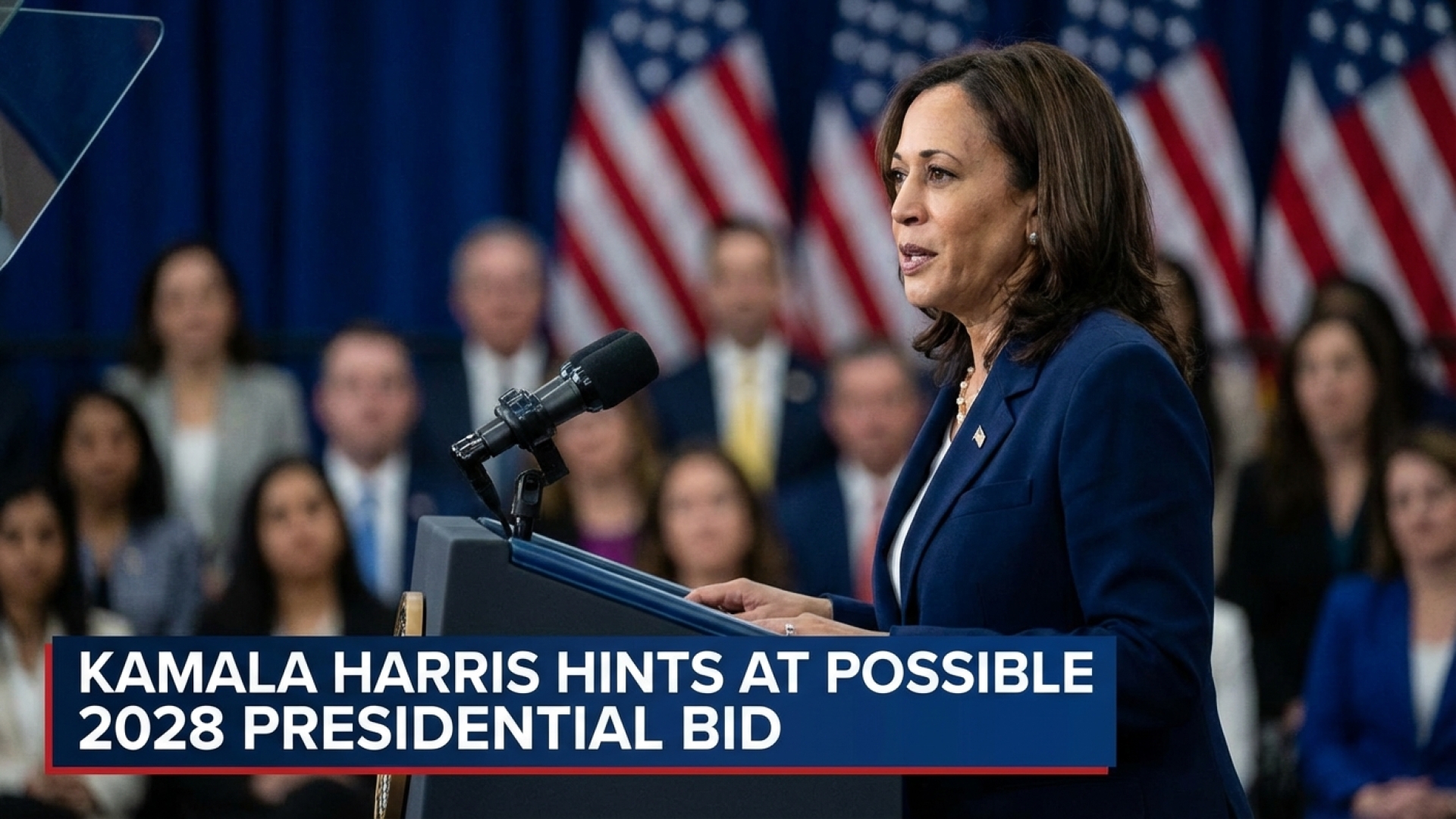
Vice President Kamala Harris has signaled a potential bid for the presidency in 2028, highlighting her continued commitment to public service and a stated belief that the current political landscape requires fundamental shifts. Her remarks, delivered during a high-profile gathering of civil rights leaders, come as various Democratic figures begin to position themselves for future leadership roles.
Harris Addresses Future Ambitions at NAN Convention
Speaking at the National Action Network (NAN) convention in New York, hosted by Rev. Al Sharpton, Harris was asked directly about her intentions for the 2028 election cycle. Her response indicated she is seriously weighing the possibility. “I might. I’m thinking about it,” Harris noted, emphasizing her familiarity with the demands of the office. “I know what the job is. I know what it requires.”
Harris attributed her motivation to the feedback she has received while traveling the country, particularly throughout the South. She observed a widespread frustration with political stagnation, noting that many Americans are seeking tangible progress over bureaucratic process. “The status quo is not working and hasn’t been working for a lot of people for a long time,” Harris asserted, positioning herself as an advocate for those dissatisfied with the current pace of change.
A Long-Term Commitment to Public Service
This recent acknowledgment aligns with previous statements regarding her political future. In a prior interview with the BBC, Harris was even more explicit about her career trajectory. “I am not done,” she stated, describing her career as a “life of service” that is deeply ingrained in her professional identity. These consistent remarks suggest a strategic long-term vision that extends well beyond the current administration’s term.
For readers of the Lake Erie Times, these developments are particularly relevant as Western New York continues to play a pivotal role in statewide and national political trends. The vice president’s focus on southern demographics and the “status quo” resonates with many in the Buffalo region who are navigating similar economic and social shifts.
Democratic Landscape and the 2026 Midterms
The NAN convention served as more than just a platform for Harris; it acted as a testing ground for several prominent Democrats looking to engage with Black voters, a cornerstone of the party’s base. The four-day event featured a variety of potential 2028 contenders who shared their perspectives on the future of the party and the country.
| Potential Candidate | Current Role | Primary Message at NAN |
|---|---|---|
| Kamala Harris | Vice President of the U.S. | Challenging the status quo and future service. |
| JB Pritzker | Governor of Illinois | Protecting voting rights and democratic integrity. |
| Wes Moore | Governor of Maryland | Economic empowerment and community engagement. |
A recurring theme throughout the convention was the perceived threat to voting rights ahead of the 2026 midterm elections. Speakers, including Illinois Governor JB Pritzker and Maryland Governor Wes Moore, warned that efforts to undermine voter access are intensified. They argued that safeguarding the democratic process is the most immediate priority for the party, ensuring that the groundwork laid now will protect the integrity of future election cycles.
As an investigative reporter for the Lake Erie Times, William Strasmore continues to monitor how these national political maneuvers impact local communities in Western New York. The focus on voting rights and regional representation remains a critical issue for Buffalo and the surrounding areas as the 2026 and 2028 cycles approach.
Disclaimer: The content provided by Lake Erie Times is for informational purposes only and should not be considered as professional legal or financial advice. Some links on Lake Erie Times are affiliate links. This means that if you make a purchase through these links, we may earn a commission at no additional cost to you. Our recommendations are based on careful research and our commitment to quality journalism.