As the global community looks toward the next frontier of space exploration, Artemis II stands as a monumental milestone, marking the first crewed lunar mission in over half a century. Slated for launch from the Kennedy Space Center, this mission represents a significant leap for NASA and a point of immense interest for the Western New York scientific community, which has long followed the nation’s aerospace achievements with pride.
The Artemis II Mission: Preparing for the Future
Unlike the historic landings of the 20th century, Artemis II is designed as a lunar flyby mission. This means that while the four-person crew will journey approximately 10 days and orbit the Moon, they will not actually touch down on the lunar surface. This specific mission profile is a deliberate step in NASA’s incremental approach to deep-space exploration.
The primary reason for the flyby is technical: the Orion spacecraft currently lacks a dedicated landing module. Landing capabilities are slated for development and deployment in subsequent missions, specifically Artemis III and Artemis IV. For now, the focus of Artemis II is to serve as a “key test flight,” as described by NASA’s Lori Glaze. The crew will spend their initial two days in orbit around Earth performing critical system checks before moving toward the Moon to evaluate Orion’s life support systems.
These evaluations are essential for ensuring that future astronauts can breathe, manage carbon dioxide, and maintain a stable environment during the much longer human missions to Mars. Furthermore, NASA is currently partnering with private entities like SpaceX and Blue Origin to finalize the lunar landers that will eventually facilitate the next “small step” for mankind.
Apollo 17: Looking Back at the Last Lunar Footprints
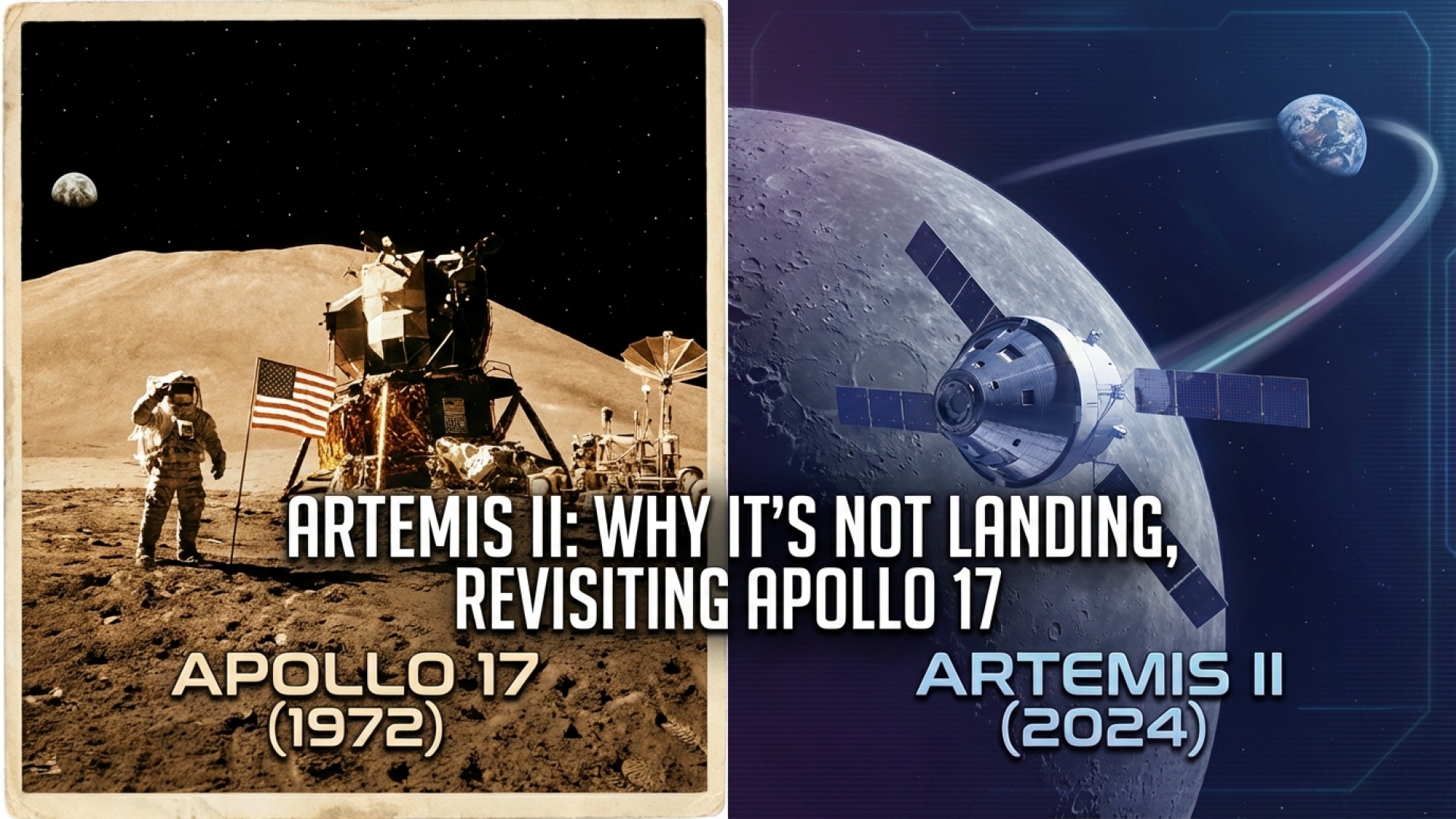
To understand the weight of the Artemis program, one must look back at the Apollo 17 mission of December 1972. This remains the final time humans physically stood on the Moon. The mission featured a crew of Eugene A. Cernan, Ronald E. Evans, and Harrison H. Schmitt. Schmitt’s presence was particularly notable as he was the first geologist to reach the lunar surface, bringing a specialized scientific eye to the Taurus-Littrow region.
During their exploration, the crew traveled over 1.4 million miles and collected invaluable samples, including the famous “orange soil” discovered by Schmitt. Today, Schmitt remains one of only four living individuals to have walked on the Moon, a stark reminder of the long hiatus in lunar exploration that Artemis II is finally poised to end.
Comparing the Eras: Apollo vs. Artemis
While both programs share the goal of lunar exploration, their objectives and technologies differ significantly. The following table highlights the key distinctions between the final Apollo mission and the upcoming Artemis flight:
| Feature | Apollo 17 (1972) | Artemis II (Planned) |
|---|---|---|
| Mission Type | Lunar Landing | Lunar Flyby (Orbit) |
| Spacecraft | Apollo Command/Service Module | Orion Spacecraft |
| Launch Vehicle | Saturn V | Space Launch System (SLS) |
| Primary Goal | Geological Survey & Sampling | System Testing for Deep Space |
| Duration | ~12 Days | ~10 Days |
A Local Perspective on a Global Journey
Here in Western New York, the resurgence of lunar missions resonates with our region’s history of industrial and technological contribution. As an investigative reporter covering community affairs, I find that these missions do more than just advance science; they foster a sense of shared purpose. While Artemis II will not see boots on the ground, the data gathered will pave the way for a permanent human presence on the Moon and, eventually, the first crewed flights to Mars.
At Lake Erie Times, we will continue to monitor the progress of the Space Launch System rocket and provide updates as the crew prepares for this historic voyage. For more insights into how national events impact our local community, visit our community news section.
Disclaimer: The content provided by Lake Erie Times is for informational purposes only and should not be considered as professional legal or financial advice. Some links on Lake Erie Times are affiliate links. If you make a purchase through these links, we may earn a commission at no additional cost to you.