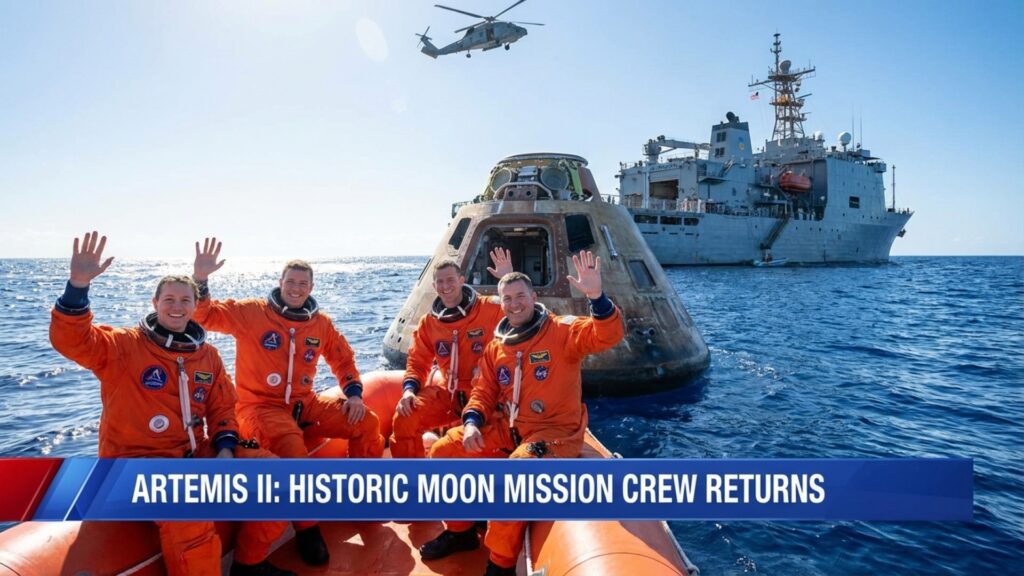
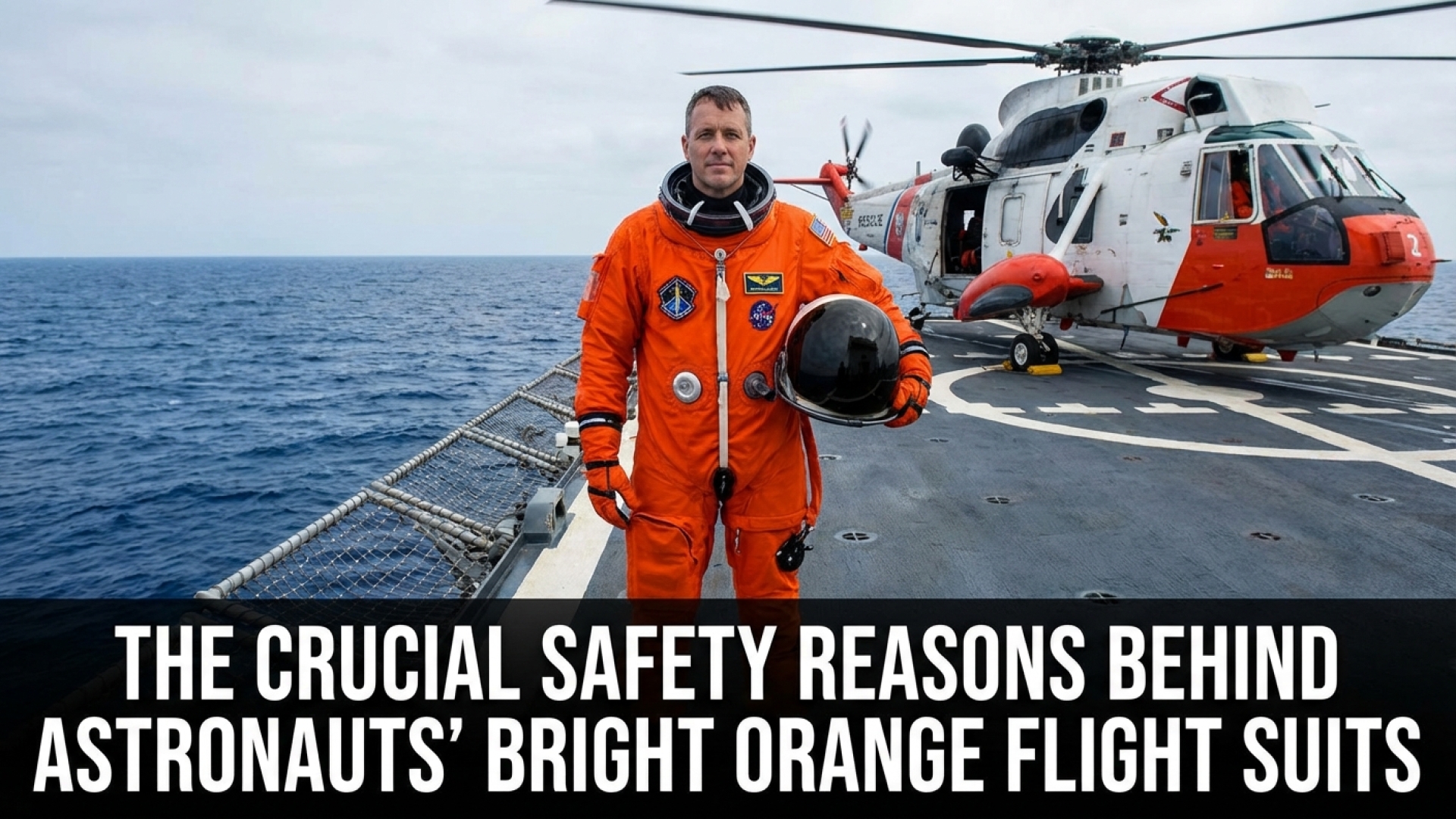
As the world watches the final preparations for the Artemis II mission, the four astronauts tasked with orbiting the moon are sporting gear that is as functional as it is striking. While Western New York has long been a hub for aerospace innovation—with local giants like Moog Inc. contributing to flight control systems—the most visible piece of technology on the crew remains their vibrant, high-visibility flight suits. Every stitch, zipper, and integrated gadget on these garments serves a life-saving purpose, leading many to ask: why the choice of “International Orange”?
For veteran reporter William Strasmore and the team at the Lake Erie Times, uncovering the engineering logic behind these design choices reveals a commitment to survival that mirrors the safety standards found in our own regional maritime and aviation industries.

The Strategic Choice of International Orange
The specific reddish-orange hue, technically known as “international orange,” was not chosen for aesthetics. It is a standard across the aerospace and marine sectors due to its extreme visibility against natural backgrounds. Just as the Golden Gate Bridge uses this shade to pierce through heavy fog, astronaut suits utilize the color to stand out against the deep black of space or the dark blue of the Earth’s oceans.
This fluorescent shade is exceptionally rare in nature. For centuries, mariners—including those navigating the unpredictable waters of Lake Erie—have relied on this color for life vests and buoys because it provides a stark contrast. In critical search-and-rescue operations, where speed is the difference between life and death, an easily discernible color is the most logical choice for survival.
Introducing the Orion Crew Survival System (OCSS)
Officially designated as the Orion Crew Survival System (OCSS), these suits are designed for the high-risk launch and re-entry phases of the mission. NASA has overhauled the OCSS from the ground up, incorporating feedback and technological advancements since the days of the Space Shuttle missions.
Beyond being a pressure vessel, the OCSS is a self-contained life-support unit. It is engineered to keep an astronaut alive for up to six days if the Orion capsule suffers a loss of cabin pressure. This capability is critical for deep-space transit where immediate return to Earth is impossible.
| Feature | Purpose | Survival Benefit |
|---|---|---|
| Integrated Life Preserver | Water flotation | Ensures head remains above water during ocean splashdown. |
| Personal Locator Beacon | GPS Tracking | Allows recovery teams to pinpoint the astronaut’s exact location. |
| Signaling Kit | Visual communication | Includes strobe lights, mirrors, and whistles for close-range detection. |
| Thermal Protection | Insulation | Protects against extreme temperature shifts in the event of depressurization. |
A Symbol of Bold Exploration
While the technical specifications of these orange flight suits are impressive, they serve a symbolic role as well. They represent the apex of human ingenuity and the inherent risks of exploration. At Lake Erie Times, we recognize the parallels between these pioneers and the industrious spirit of Western New York—constantly pushing boundaries and valuing precision in every endeavor.
As the Artemis II crew prepares for their historic journey, their suits stand as a testament to the “safety-first” philosophy that governs modern space flight. For more in-depth reporting on the technology shaping our world and region, stay tuned to our local business and tech coverage.
Disclaimer: The content provided by Lake Erie Times is for informational purposes only and should not be considered as professional legal or financial advice. Some links may be affiliate links; we may earn a commission at no additional cost to you based on our commitment to quality journalism.