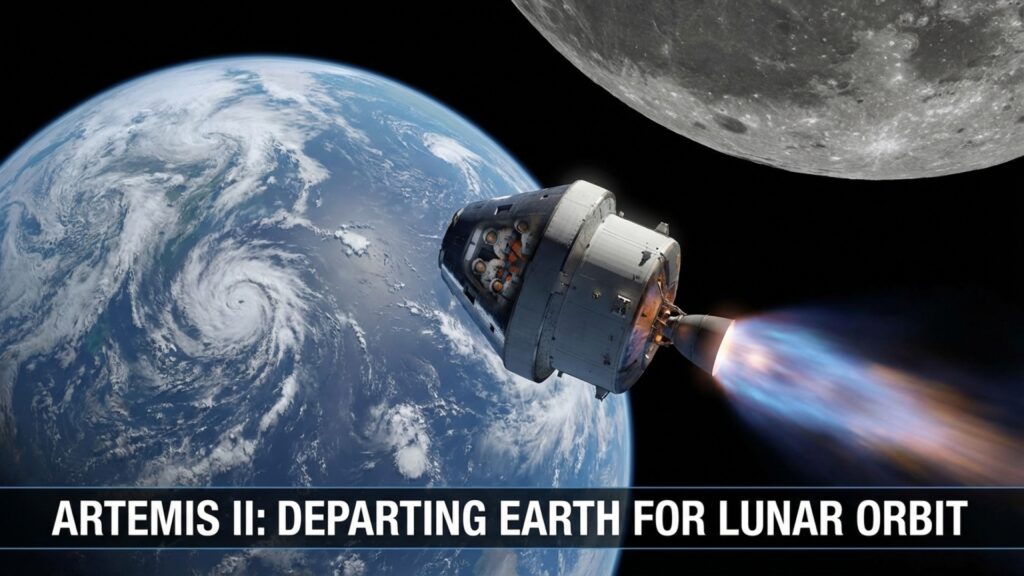
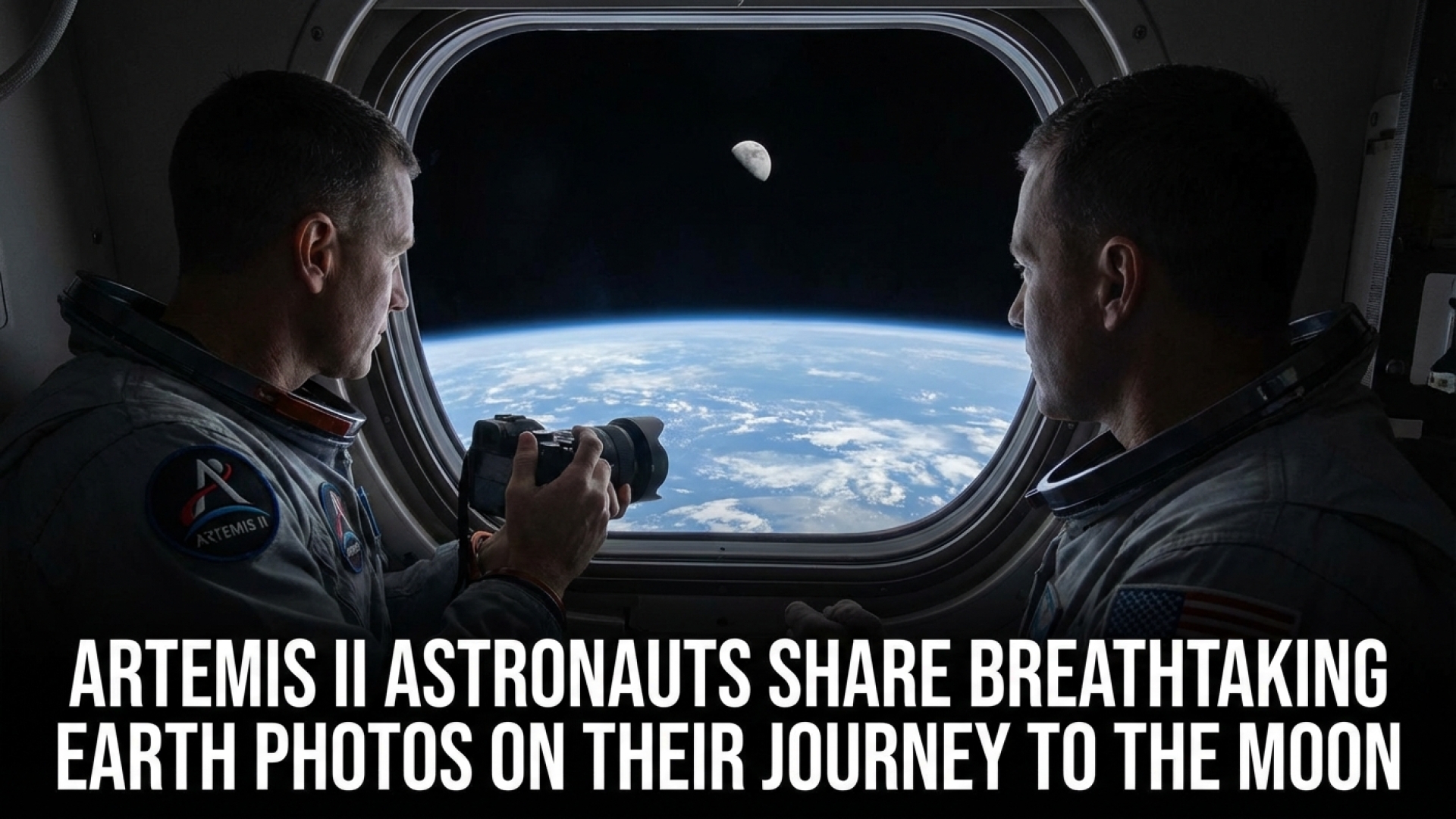
As Western New York residents look toward the skies, a new set of high-resolution images from deep space is captivating the world. The first high-definition photos from the Artemis II mission have been downlinked to NASA, offering a breathtaking glimpse of Earth from a perspective not seen by human eyes in over half a century. These historic images, captured by the crew currently journeying toward the moon, showcase the dynamic majesty of our planet, including vibrant green auroras shimmering above the atmosphere.
William Strasmore, reporting for the Lake Erie Times, notes that these images arrive just 36 hours into the first crewed lunar mission since the Apollo era. This milestone marks a significant return to deep-space exploration, laying the groundwork for the next generation of human endeavors beyond our home orbit.
A New Perspective on the Blue Marble
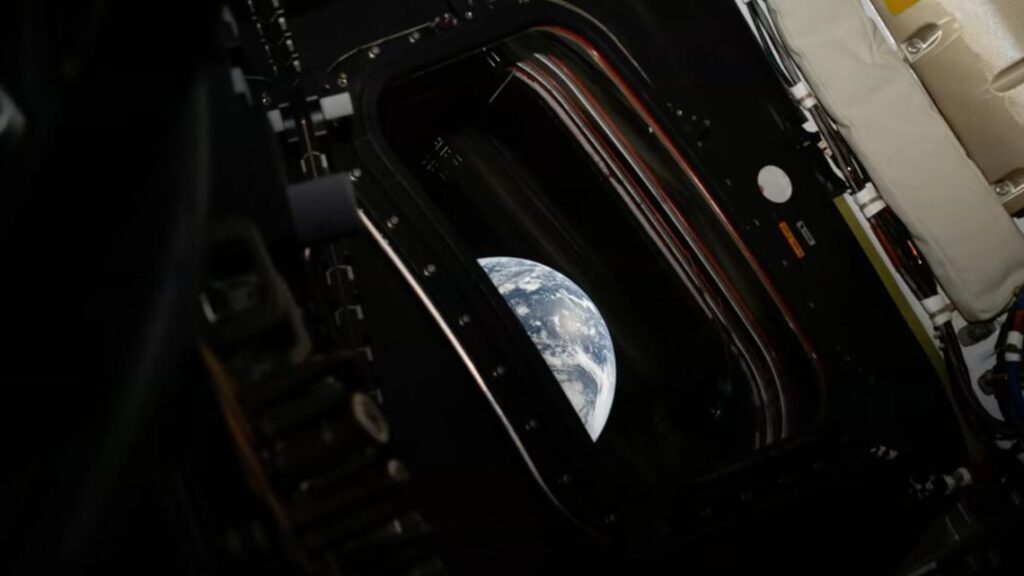
The collection includes a striking shot taken by Commander Reid Wiseman from within the Orion capsule. The image reveals a gracefully curved sliver of Earth framed by the spacecraft’s window, providing a profound sense of the scale and isolation of space travel.
Perhaps the most extraordinary image released features a full global view. Vast blue oceans are draped in intricate, swirling white cloud formations. NASA officials highlighted a unique detail in this frame: a vivid green aurora glowing brightly against the darkness of the void, a phenomenon that even seasoned astronauts found mesmerizing.

As of Friday morning, Wiseman and his crew—comprised of three Americans and one Canadian—had traveled approximately 100,000 miles (160,000 kilometers) from Earth. They are steadily closing the gap on the moon, with roughly 160,000 miles remaining in the outbound leg of their journey.
Tracking the Artemis II Lunar Path
The mission’s trajectory was refined late Thursday evening following a successful burn of Orion’s main engine. During a maneuver to adjust the capsule’s orientation, the crew was treated to a full view of the Earth illuminated by the sun and the northern lights. Commander Wiseman described the sight as “the most spectacular moment” of the mission so far, noting that it “paused all four of us in our tracks.”
This historic voyage represents the first time humans have ventured toward the lunar vicinity since the Apollo 17 mission in 1972. While Apollo focused on landing, Artemis II serves as a critical test of the life-support and navigation systems required for future sustained lunar presence.
Breaking Distance Records
On flight day six, the Orion spacecraft is scheduled to reach its maximum distance from Earth, venturing approximately 4,000 miles (6,400 kilometers) beyond the far side of the moon. This milestone, expected on Monday, will see the crew surpass the distance record set by Apollo 13 in 1970.
Unlike the harrowing return of Apollo 13, which relied on the moon’s gravity following a mid-flight emergency, Artemis II is using a planned gravitational “slingshot” maneuver. After emerging from behind the lunar surface, the crew will begin a direct return journey, targeting a splashdown on flight day 10. The total mission duration is projected at nine days, one hour, and 46 minutes.
For more updates on regional impacts of national news and scientific milestones, stay connected with the Lake Erie Times.
About the Author: William Strasmore is a dedicated news reporter for the Lake Erie Times, providing in-depth coverage of regional and national issues affecting the Western New York community. For more of his investigative work, visit his author page.
Disclaimer: The content provided by Lake Erie Times is for informational purposes only and should not be considered as professional legal or financial advice. Some links on Lake Erie Times are affiliate links. If you make a purchase through these links, we may earn a commission at no additional cost to you.