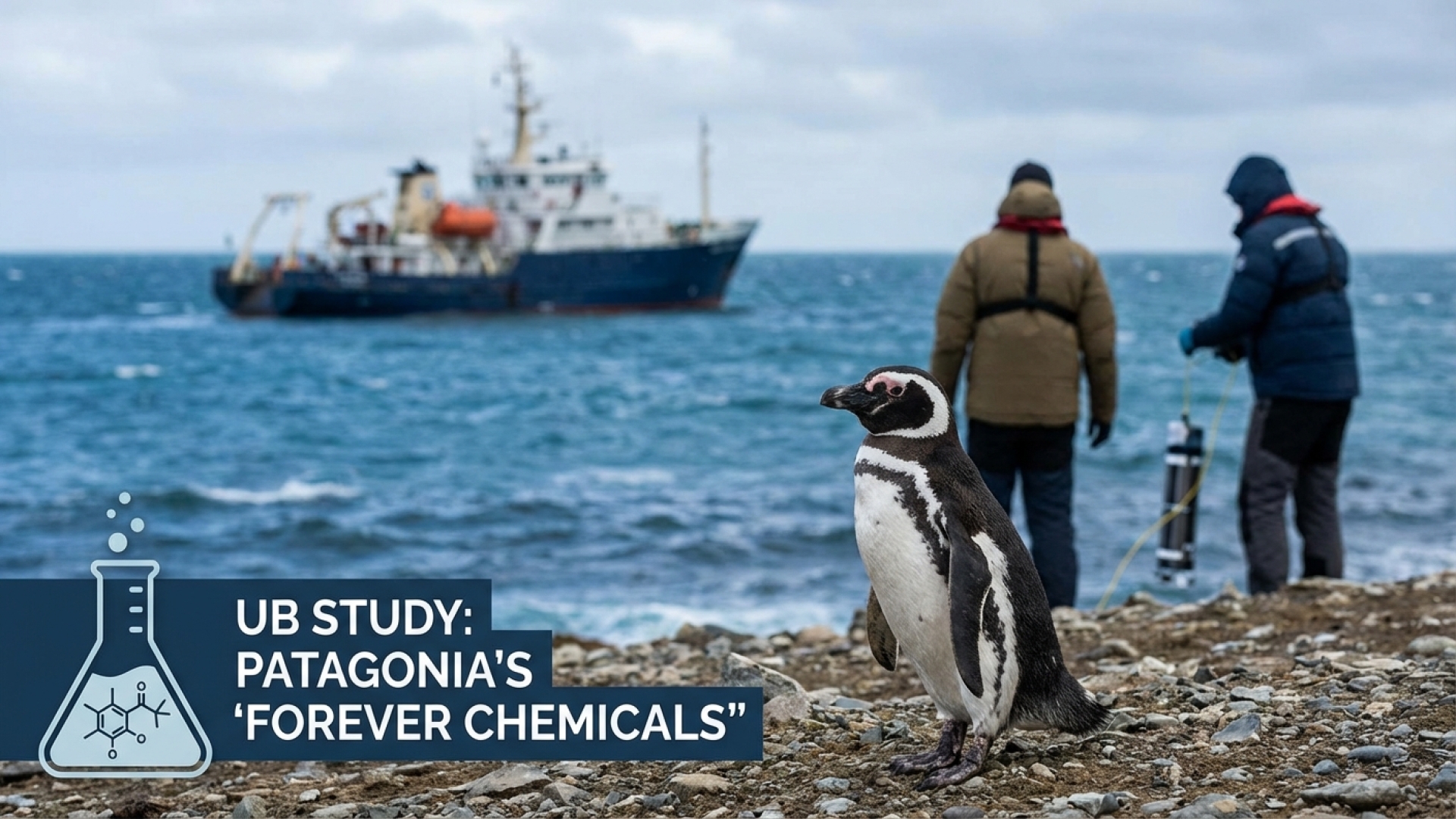
Researchers from the University at Buffalo (UB) are making waves in the international scientific community, leading a groundbreaking study that reveals the alarming reach of per- and polyfluoroalkyl substances (PFAS)—commonly known as “forever chemicals”—in some of the world’s most remote regions. By employing an innovative and non-invasive research method, the Buffalo-based team has identified these persistent pollutants in the pristine waters of Patagonia.
A Novel Approach: Penguins as Environmental Sentinels
In a creative collaboration supported by the Houston Zoo, the research team sought to map chemical concentrations in Argentinian coastal waters. To gather data from hard-to-reach aquatic environments, they enlisted the help of 54 Magellanic penguins. This investigative approach involved attaching specialized silicone chemical samplers to the birds, which naturally absorbed substances from the water as the penguins moved through their habitat. This method allowed for high-accuracy data collection without disrupting the local ecosystem.
Alarming Findings: The Spread of “Forever Chemicals”
Once the samplers were returned to the University at Buffalo for analysis, the results were startling. PFAS were detected in over 90% of the samplers. The data revealed a concerning mix of legacy compounds and “new generation” chemicals, such as GenX—a substance frequently used in the production of non-stick coatings and various consumer goods.
| Chemical Category | Common Sources | Environmental Impact |
|---|---|---|
| Legacy PFAS | Industrial manufacturing, firefighting foams | High persistence, bioaccumulative in wildlife |
| GenX (Newer PFAS) | Non-stick coatings, consumer products | High mobility, capable of long-range transport |
Insights from UB’s RENEW Institute
Dr. Diana Aga, director of the UB RENEW Institute and the study’s lead author, highlighted the significance of the findings for Western New York and the world. “By using a non-invasive sampling approach, we were able to detect a shift from legacy PFAS to newer replacement chemicals in the penguin’s environment over time,” Dr. Aga explained. She noted that while these newer chemicals are often marketed as safer, they remain persistent enough to spread across the globe, posing significant risks to biodiversity and global ecosystems.
Why This Matters for Western New York
As a hub for scientific innovation, Buffalo continues to lead the charge in environmental advocacy and research. The work performed by the University at Buffalo and their partners at the University of California-Davis underscores the importance of local expertise in solving global crises. This study not only validates a more humane way of monitoring environmental health but also serves as a stark reminder of the long-lasting impact industrial chemicals have on our planet’s most vulnerable species.
For more updates on regional scientific breakthroughs and community news, stay connected with the Lake Erie Times community section.
About the Author: William Strasmore is a dedicated news reporter for the Lake Erie Times. With a background in investigative journalism, William focuses on providing the Western New York community with in-depth analysis of local politics, regional events, and scientific developments. View more of his work on his author page.
Disclaimer: The content provided by Lake Erie Times is for informational purposes only and should not be considered as professional legal or financial advice. Some links on Lake Erie Times are affiliate links. This means that if you make a purchase through these links, we may earn a commission at no additional cost to you.