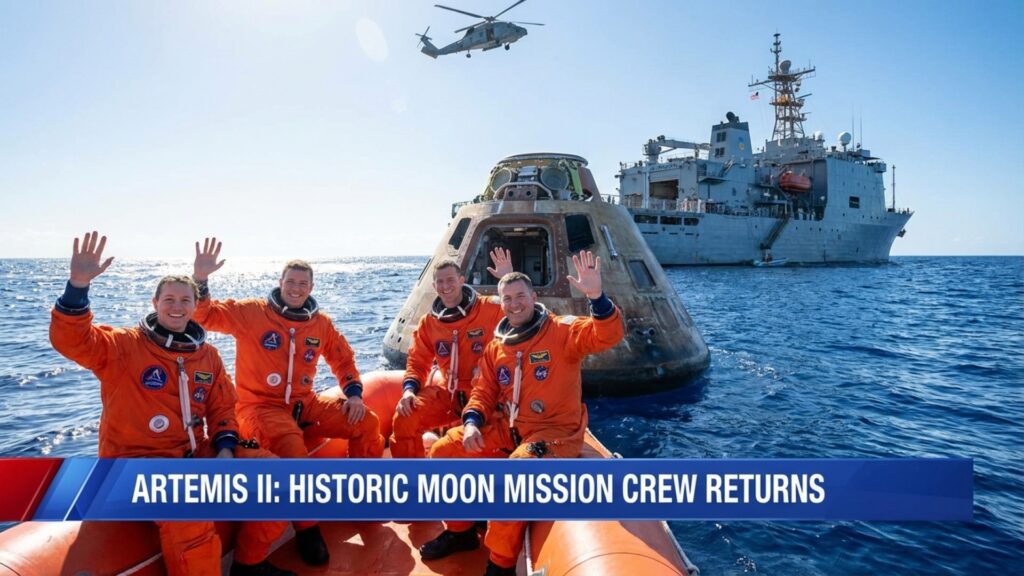
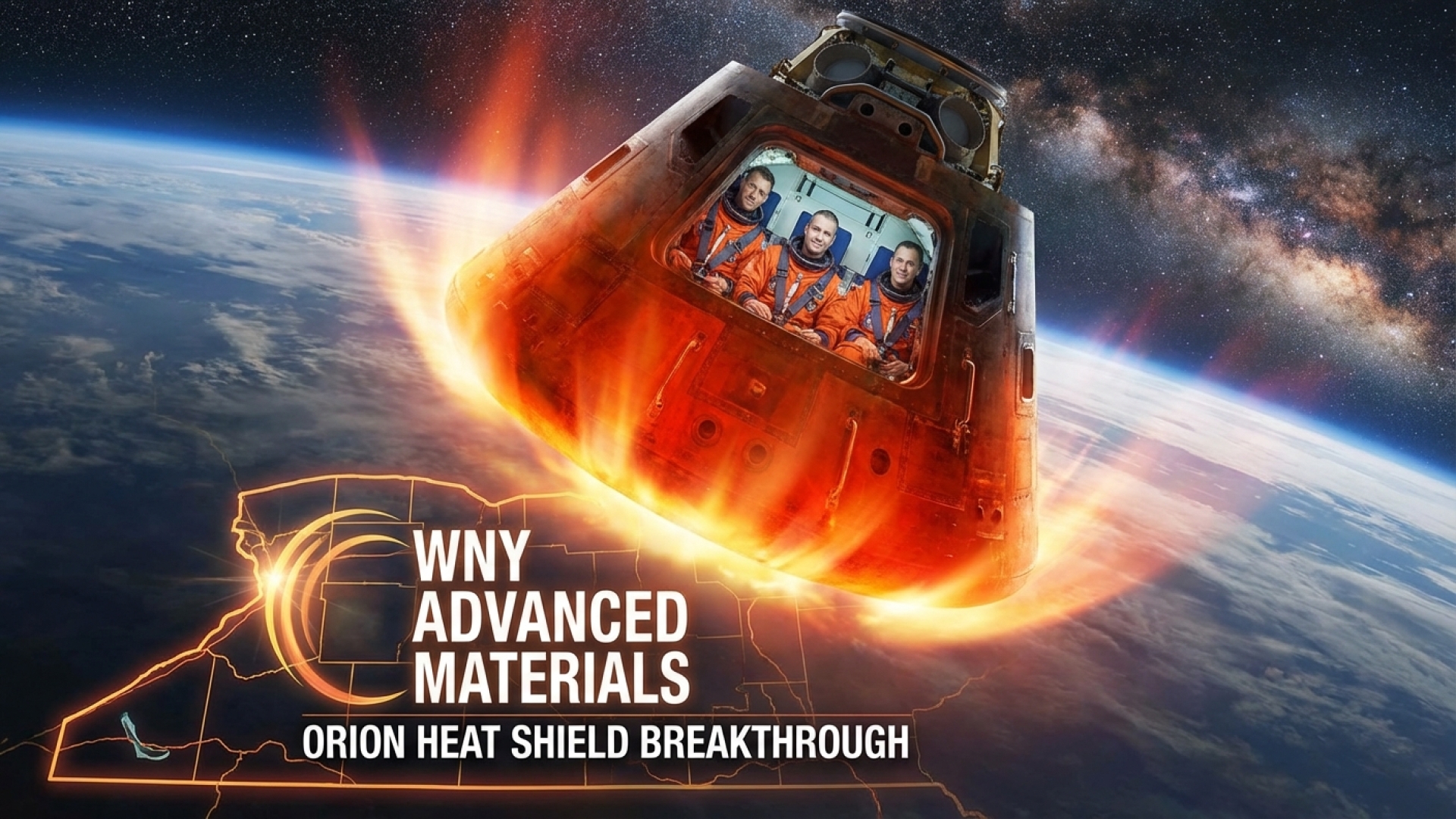
As the eyes of the world turn toward the stars for the upcoming Artemis II mission, the road to the Moon runs directly through Cheektowaga. While the SLS rocket launch captures the headlines, aerospace engineers in Western New York are focusing on the most perilous part of the journey: the blazing return to Earth. At the heart of this effort is a local powerhouse of innovation ensuring that our astronauts make it home safely.
Tim Wadhams, an aerospace engineer at the CUBRC (Calspan UB Research Center), understands the gravity of the mission. “There are people on board this thing and so the risk is a lot higher,” Wadhams noted. His team’s work is critical to the re-entry phase, where the Orion crew capsule must withstand a violent plunge through Earth’s atmosphere before a planned splashdown.
CUBRC’s Legacy in Space Safety
Located in the heart of the Western New York aerospace corridor, CUBRC has long been a silent partner in NASA’s most ambitious projects. The facility utilizes specialized shock wind tunnels to simulate the extreme physics of space travel. Their expertise was famously called upon to analyze the 2003 Columbia shuttle tragedy, and today, that same investigative rigors are being applied to the Artemis program.
During re-entry, the Orion capsule faces a cocktail of destructive forces, including friction and plasma gases that reach temperatures of 5,000 degrees Fahrenheit. CUBRC’s role is to ensure the heat shield can survive this thermal onslaught. “We are very careful about how we calibrate and check uncertainties,” Wadhams explained, emphasizing that their data validates the very designs meant to keep the crew alive.
| Mission Component | Testing Parameter | Engineering Challenge |
|---|---|---|
| Orion Heat Shield | 5,000°F Thermal Load | Material ablation and structural integrity |
| Re-entry Dynamics | Mach Speeds | Shockwave energy and plasma gas build-up |
| Crew Safety | Atmospheric Friction | Validating design margins for human occupants |
Solving the Artemis I Anomalies
The urgency of CUBRC’s work increased following the Artemis I test flight in 2022. Although the uncrewed mission was deemed a success, post-flight inspections revealed that portions of the protective heat shield had worn away unexpectedly. This discovery prompted NASA to return to the experts in Western New York for deeper analysis throughout 2023 and 2024.
According to Wadhams, the “removal of the heat shield” was more extensive than initial models predicted. The resulting data from CUBRC’s local facilities led to significant design adjustments by lead contractor Lockheed Martin. These changes, which include modifications to how the capsule attaches to the launch vehicle, were essential steps before NASA could commit to the crewed Artemis II flight schedule.
A Personal Stake in Local Excellence
For Wadhams, the mission isn’t just a professional milestone—it’s personal. The Commander of Artemis II, Reid Wiseman, is a fellow alumnus of Rensselaer Polytechnic Institute and a personal friend. This connection underscores the weight of the engineering decisions made right here in our community.
“You think back like, ‘Did we do all this testing right? Did we cross all the T’s and dot all the I’s?'” Wadhams reflected. His conclusion remains one of confidence, assuring that the rigorous standards upheld in Cheektowaga provide the necessary safety margins for his friend and the rest of the crew.
This contribution to the future of lunar exploration highlights the vital role local business and research institutions play in global achievements. As Western New York continues to foster high-tech industries, the region secures its place as a cornerstone of American aerospace ingenuity.
For more updates on local industry and community achievements, visit the Lake Erie Times. Our mission is to provide accurate, in-depth coverage of the issues that matter most to the Western New York region.